Cheap Printed T-Shirts UK: Quality & Value Guide 2026
Discover how to source cheap printed t-shirts UK without compromising…
Custom shirt embroidery transforms ordinary garments into professional, branded pieces that make lasting impressions. Whether you're outfitting a corporate team, creating branded merchandise for your business, or personalising school uniforms, embroidery offers unmatched durability and visual appeal. Unlike printing methods that can fade or crack over time, embroidered designs maintain their quality through countless washes, making them ideal for workwear and garments that face regular use. Understanding the embroidery process, design requirements, and fabric considerations ensures your custom shirts achieve the polished, professional results you're seeking.
Modern custom shirt embroidery encompasses several specialized techniques, each suited to different design requirements and aesthetic goals. The most common approach is direct embroidery, where designs are stitched directly onto the garment using computerized machinery that precisely follows digitized patterns.
3D puff embroidery creates raised, dimensional logos by layering foam beneath the stitches, adding texture and visual impact to designs. This technique works particularly well for bold lettering and simple graphics on caps, hoodies, and casual shirts. Athletic teams and streetwear brands frequently choose this method for its distinctive appearance.
Embroidered patches offer versatility for branding multiple garment types. These pre-made designs can be sewn or heat-applied to shirts, jackets, and bags, allowing consistent branding across diverse product ranges. Patches prove especially practical when decorating items that cannot accommodate direct embroidery or when creating removable designs for rental uniforms.
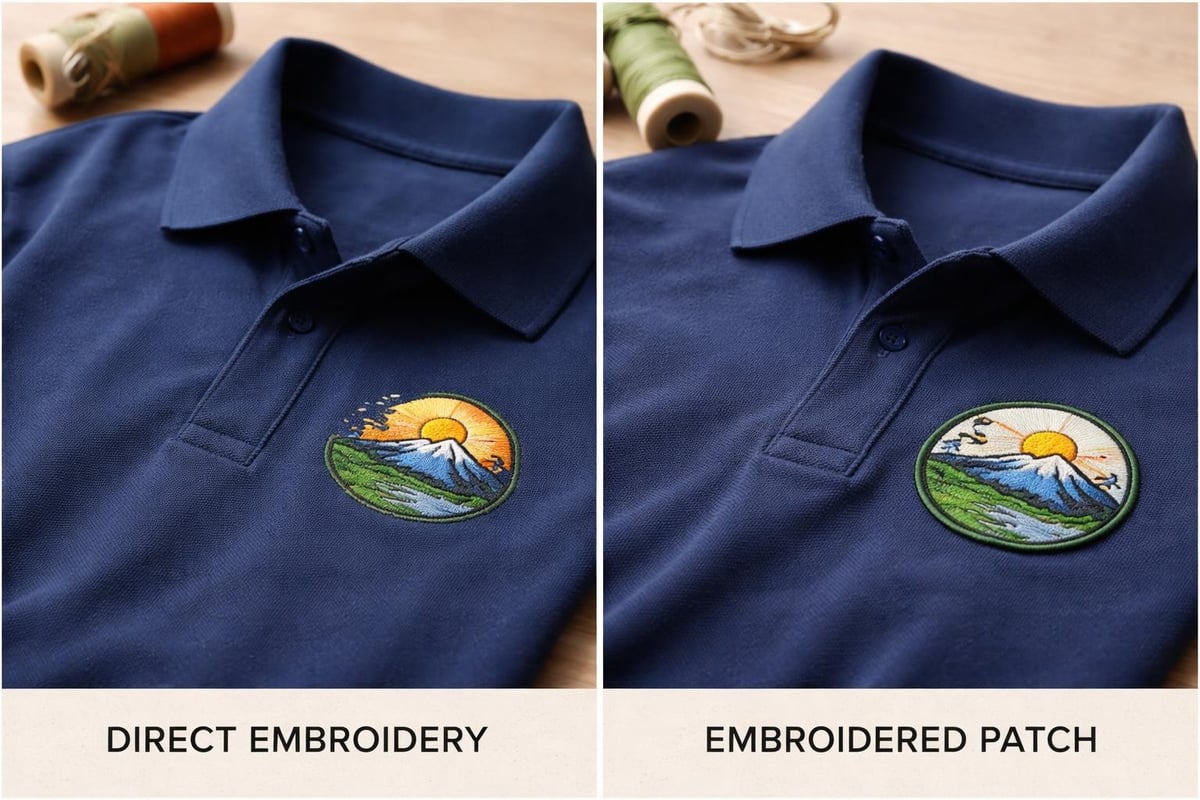
The various embroidery techniques available each serve specific purposes, from delicate monogramming on dress shirts to bold corporate logos on polo shirts. Appliqué embroidery combines fabric pieces with stitching, creating multi-textured designs that reduce stitch counts whilst maintaining visual impact.
Successful custom shirt embroidery begins with designs optimized for thread-based reproduction. Unlike printed graphics that can render intricate details and gradients, embroidery works best with clean, bold artwork that translates well into stitches.
Text elements require careful consideration. Minimum lettering heights should measure at least 5-6mm for standard fonts, with simpler typefaces performing better than ornate scripts. Avoid thin, delicate fonts that may become illegible when rendered in thread, particularly for smaller text elements like taglines or contact details.
Following embroidery design guidelines helps ensure your artwork translates effectively from screen to stitched reality. Professional digitizers can adjust designs to compensate for fabric movement and thread limitations.
Standard embroidery typically accommodates 6-8 colours within a single design, though simpler colour schemes often produce cleaner results. Thread colour matching involves selecting from established thread libraries, with professional embroiderers offering guidance on choosing shades that closely match brand specifications.
| Design Element | Recommended Approach | Why It Matters |
|---|---|---|
| Fine lines | Minimum 1mm thickness | Prevents thread gaps and broken stitches |
| Small text | 5mm+ height | Ensures readability after stitching |
| Colour count | 4-6 colours maximum | Reduces complexity and cost |
| Logo complexity | Simplified versions | Creates cleaner, more durable results |
Metallic, variegated, and specialty threads add visual interest but may affect pricing and production time. Consider the garment's intended use when selecting thread types, as decorative threads sometimes require more delicate care than standard polyester options.
Fabric selection significantly impacts embroidery quality and longevity. Different materials respond differently to the stitching process, with some fabrics providing better stabilization and more professional results than others.
100% cotton shirts represent the gold standard for custom shirt embroidery, offering excellent stability and a premium feel. The natural fibres hold stitches securely whilst providing a professional backdrop that showcases embroidered designs. Cotton-polyester blends (typically 50/50 or 65/35 ratios) combine cotton's natural appearance with polyester's wrinkle resistance and durability.
Performance fabrics and moisture-wicking materials require specialized stabilizers and techniques. These technical textiles, common in sportswear and activewear, can accommodate embroidery but demand experienced handling to prevent puckering and distortion. The stretchy nature of performance fabrics means designs must be carefully positioned and sized to maintain their appearance during wear.
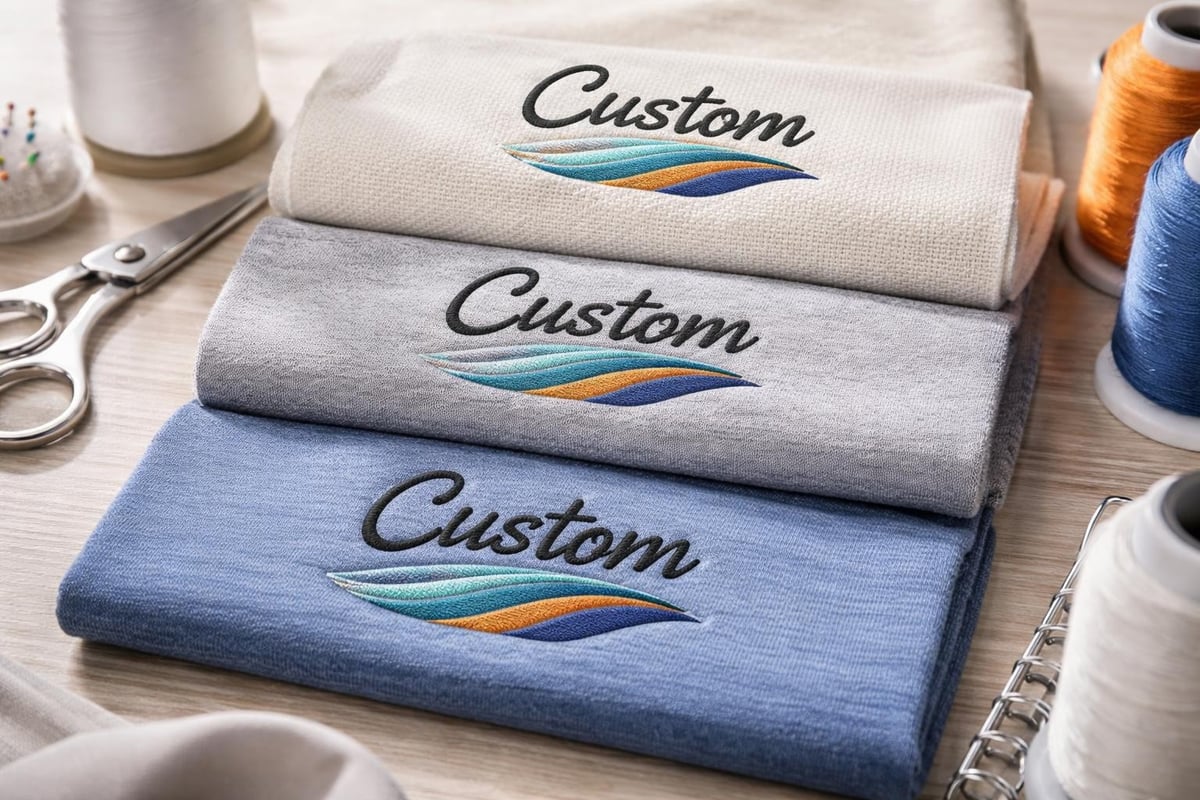
Polo shirts and button-down dress shirts offer multiple placement options for embroidered logos. Left chest placement remains the most popular choice for corporate branding, positioned approximately 7-10cm below the shoulder seam and centered between the placket and sleeve seam.
Common embroidery placements include:
Workwear and uniforms benefit from strategic embroidery placement that remains visible during typical work activities. Consider how garments layer and where designs will show when employees wear jackets, aprons, or safety equipment over their shirts.
Understanding the production workflow helps set realistic expectations for timelines and costs. Professional custom shirt embroidery involves several steps between initial concept and finished garment.
Artwork must be converted into a digital embroidery file (.DST, .PES, or similar formats) that machines can read. This digitization process involves programming each stitch's path, direction, and type to recreate the design in thread. Experienced digitizers account for fabric characteristics, garment construction, and design complexity when creating these files.
Many embroiderers provide sample runs or physical proofs for approval before processing larger orders. These samples verify colour accuracy, sizing, and overall appearance, allowing adjustments before committing to full production runs.
Modern computerized embroidery machines operate with remarkable precision, but human oversight ensures consistent quality. Operators monitor thread tension, check colour sequences, and inspect finished garments for any irregularities.
Production timelines vary based on order size, design complexity, and current workload. Simple single-colour logos may embroider in minutes per garment, whilst multi-colour, high-stitch-count designs require longer machine time. Bulk orders benefit from setup efficiency, with per-piece costs decreasing as quantities increase.
Understanding pricing structures helps budget effectively for embroidered shirt projects. Several variables influence the final cost, from design complexity to order quantities.
Stitch count directly affects pricing, as designs with higher stitch counts require more thread and machine time. A simple text-based logo might contain 3,000-5,000 stitches, whilst detailed graphics can exceed 15,000 stitches. Many embroiderers charge per thousand stitches, with prices decreasing for larger orders.
One-time setup fees cover digitization and machine programming. These costs are amortized across larger orders, making bulk purchases more economical. Reorder programmes eliminate repeat setup fees, reducing costs for ongoing uniform or merchandise needs.
| Order Quantity | Typical Setup Impact | Per-Garment Cost Range |
|---|---|---|
| 1-5 shirts | Full setup fee per piece | £8-15 per item |
| 6-24 shirts | Moderate setup impact | £5-10 per item |
| 25-99 shirts | Reduced setup impact | £3-7 per item |
| 100+ shirts | Minimal setup impact | £2-5 per item |
Additional costs may include specialty threads, multiple placement locations, or rush production services. Transparent pricing structures help businesses plan budgets and understand value.
Businesses across industries leverage custom shirt embroidery for diverse purposes. The professional appearance and durability make embroidered garments suitable for numerous applications.
Companies create cohesive team appearances through embroidered polo shirts, dress shirts, and workwear. Consistent branding across employee apparel reinforces professional identity whilst making staff easily identifiable to customers. Custom apparel companies have built entire business models around serving corporate uniform needs.
Service industries particularly value embroidery's durability. Mechanics, hospitality staff, and healthcare workers require garments that withstand frequent laundering whilst maintaining branded appearance. Embroidered workwear survives harsh conditions that would destroy printed alternatives.
School uniforms featuring embroidered crests and emblems create sense of belonging and institutional pride. The permanent nature of embroidery suits garments passed between siblings or resold, as designs won't peel or fade. Schools appreciate the professional appearance embroidered logos provide for sports teams, clubs, and formal occasions.

Events and promotional campaigns benefit from embroidered apparel's perceived quality. Trade show attendees and conference participants value embroidered shirts more highly than basic printed alternatives, increasing the likelihood garments will be worn repeatedly. This extended wear maximizes brand exposure and marketing value.
Sports teams, charity fundraisers, and community organizations create unified group identity through matching embroidered shirts. The customization options available through platforms like OK T-Shirt make it accessible for organizations of all sizes to create professional branded apparel.
Proper maintenance extends the life of custom shirt embroidery, ensuring designs remain vibrant and intact through years of wear. Simple care practices protect your investment and maintain professional appearance.
Turn embroidered garments inside out before washing to protect thread from abrasion. Use gentle cycles with cool or warm water, avoiding hot temperatures that can affect thread colours and fabric integrity. Mild detergents clean effectively without harsh chemicals that might damage thread or fabric.
Air drying proves gentlest for embroidered shirts, though low-heat tumble drying is generally safe. High heat can affect thread sheen and potentially damage specialty threads like metallic or heat-sensitive materials. Never iron directly on embroidered designs, as heat can flatten stitches and potentially melt synthetic threads.
Storage recommendations include:
Regular inspection helps identify loose threads or minor damage before it worsens. Professional embroiderers can often repair small issues, restoring garments to pristine condition.
Selecting the right embroidery provider ensures satisfactory results that meet professional standards. Several factors distinguish quality embroiderers from basic services.
Established embroiderers demonstrate their capabilities through diverse portfolios showcasing various design styles, garment types, and industries served. Companies like BlueCotton emphasize quality and attention to detail in their embroidery services, reflecting industry best practices.
Request samples or references from businesses similar to yours. Seeing how a provider handles designs comparable to your requirements offers insight into their capabilities and quality standards.
Modern multi-head embroidery machines enable efficient production whilst maintaining quality. Ask about equipment capabilities, including maximum embroidery sizes, specialty techniques offered, and production capacity. Providers with in-house digitizing services often deliver better results than those outsourcing this critical step.
Customer service responsiveness and communication throughout the process indicate professionalism. Quality providers offer design consultations, proof approvals, and transparent timelines, ensuring clients understand each stage of production.
Whilst custom shirt embroidery offers distinct advantages, understanding alternative decoration methods helps determine the best approach for specific projects.
Screen printing excels for large, full-colour designs on light-coloured garments, offering lower per-piece costs for bulk orders. However, printed designs may crack or fade over time, particularly with frequent washing. Embroidery provides superior durability and perceived quality, justifying higher costs for professional uniforms and premium merchandise.
| Factor | Embroidery | Screen Printing |
|---|---|---|
| Durability | Excellent, withstands repeated washing | Good, may fade or crack eventually |
| Design complexity | Best for simple logos and text | Handles detailed, multi-colour artwork |
| Texture | Raised, dimensional appearance | Flat, smooth finish |
| Cost per piece | Higher, especially for small quantities | Lower for bulk orders |
| Setup costs | Digitization fee | Screen creation fee |
Digital transfer methods like DTG (direct-to-garment) and heat transfer vinyl offer middle-ground options. These technologies suit detailed designs and small quantities but may not match embroidery's professional appearance and longevity.
Choose custom shirt embroidery when durability, professional appearance, and perceived quality matter most. Corporate environments, formal settings, and situations requiring long-term garment use favor embroidery's permanence and polished look.
Embroidery particularly suits:
The tactile quality and three-dimensional nature of embroidery create premium positioning that printed alternatives cannot replicate, making it ideal for businesses emphasizing quality and professionalism.
Geographic considerations influence embroidery service selection, with both local and online providers offering distinct advantages.
Working with nearby embroidery services facilitates in-person consultations, physical samples review, and immediate communication. Local providers like those serving Birmingham and surrounding areas understand regional business needs and can accommodate rush orders with quick pickup.
Supporting local businesses strengthens community connections whilst enabling relationship building that improves service quality over time. Face-to-face interactions help clarify design requirements and ensure accurate interpretation of branding guidelines.
National embroidery services leverage economies of scale, sometimes offering competitive pricing for bulk orders. Online platforms provide convenient ordering interfaces and standardized processes, though they may lack personalization and flexibility of local providers.
Consider turnaround times when evaluating online services, as shipping adds days to delivery schedules. Local providers often complete and deliver orders faster, particularly for modest quantities or time-sensitive projects.
Successful embroidery projects begin with thorough planning addressing design, budget, timeline, and garment selection considerations.
Allow adequate lead time for design development, digitization, proof approval, and production. Rush services accommodate urgent needs but typically incur premium charges. Standard timelines for custom shirt embroidery projects generally span:
Seasonal demands affect availability, with back-to-school periods, year-end holidays, and spring event seasons creating heavier workloads. Planning projects during slower periods may secure faster turnaround and better pricing.
Request detailed quotes comparing setup fees, per-piece embroidery costs, garment prices, and any additional charges. Understanding complete project costs prevents budget surprises and enables informed decision-making.
Bulk ordering reduces per-unit costs significantly. Consider consolidating multiple department needs or planning annual uniform purchases to maximize volume discounts. Many providers offer storage programmes, embroidering garments as needed whilst maintaining consistent pricing from initial bulk orders.
The embroidery industry continues evolving with technological advances and changing consumer preferences influencing custom shirt embroidery approaches.
Sustainability concerns drive interest in organic cotton garments, recycled polyester fabrics, and eco-friendly thread options. Businesses increasingly seek embroidery services demonstrating environmental responsibility through waste reduction, energy-efficient equipment, and sustainable material sourcing.
Advanced digitizing software creates more precise embroidery files with reduced production time. Some providers offer online design tools allowing customers to visualize embroidered logos on various garment styles before ordering, streamlining the approval process.
Automation improvements increase production efficiency whilst maintaining quality standards. Multi-head machines simultaneously embroider multiple garments, reducing turnaround times for bulk orders without compromising stitch precision.
Beyond corporate logos, custom shirt embroidery increasingly includes individual names, numbers, and personal messages. Teams and organizations value this personalization for creating connection and recognizing individual members. Modern embroidery technology makes adding unique elements to each garment economically feasible, even in modest quantities.
Custom shirt embroidery delivers unmatched durability, professional appearance, and branding impact that makes it the preferred choice for businesses, schools, and organizations seeking quality garments. Understanding design requirements, fabric selection, and production processes ensures your embroidered shirts achieve the polished results that effectively represent your brand. OK T-Shirt brings over 10 years of embroidery expertise to Birmingham businesses and beyond, combining advanced equipment with personalized service to create custom embroidered clothing that exceeds expectations. Whether you need corporate uniforms, school apparel, or promotional merchandise, their fast turnaround times and commitment to quality ensure your custom shirt embroidery project succeeds from concept to completion.
OK T-Shirt
126 Beeches Rd
Birmingham
B42 2HQ
