Cheap Printed T-Shirts UK: Quality & Value Guide 2026
Discover how to source cheap printed t-shirts UK without compromising…
An embroidered logo t shirt represents far more than simple branded apparel. It's a statement of quality, professionalism, and attention to detail that sets businesses apart in an increasingly competitive marketplace. Unlike printed alternatives, embroidered logos offer a tactile, three-dimensional quality that communicates permanence and craftsmanship. As we navigate through 2026, businesses across Birmingham and the wider UK continue to recognise the enduring value of embroidery for creating premium branded garments that withstand the test of time whilst maintaining their visual appeal.
The decision to choose embroidery over alternative decoration methods stems from several compelling factors. Embroidered designs create a raised, textured appearance that immediately conveys premium quality. This technique has remained popular in 2025-2026 custom apparel trends precisely because it offers unmatched durability and a professional aesthetic that screen printing or heat transfer methods struggle to replicate.
When businesses invest in branded apparel, longevity matters. An embroidered logo t shirt withstands commercial laundering, frequent wear, and harsh conditions without fading, cracking, or peeling.
Key durability benefits include:
The thread used in professional embroidery is specifically engineered to resist UV degradation, chemical exposure, and mechanical stress. This makes embroidered garments particularly suitable for workwear applications, outdoor events, and uniforms where appearance must remain consistent over time.
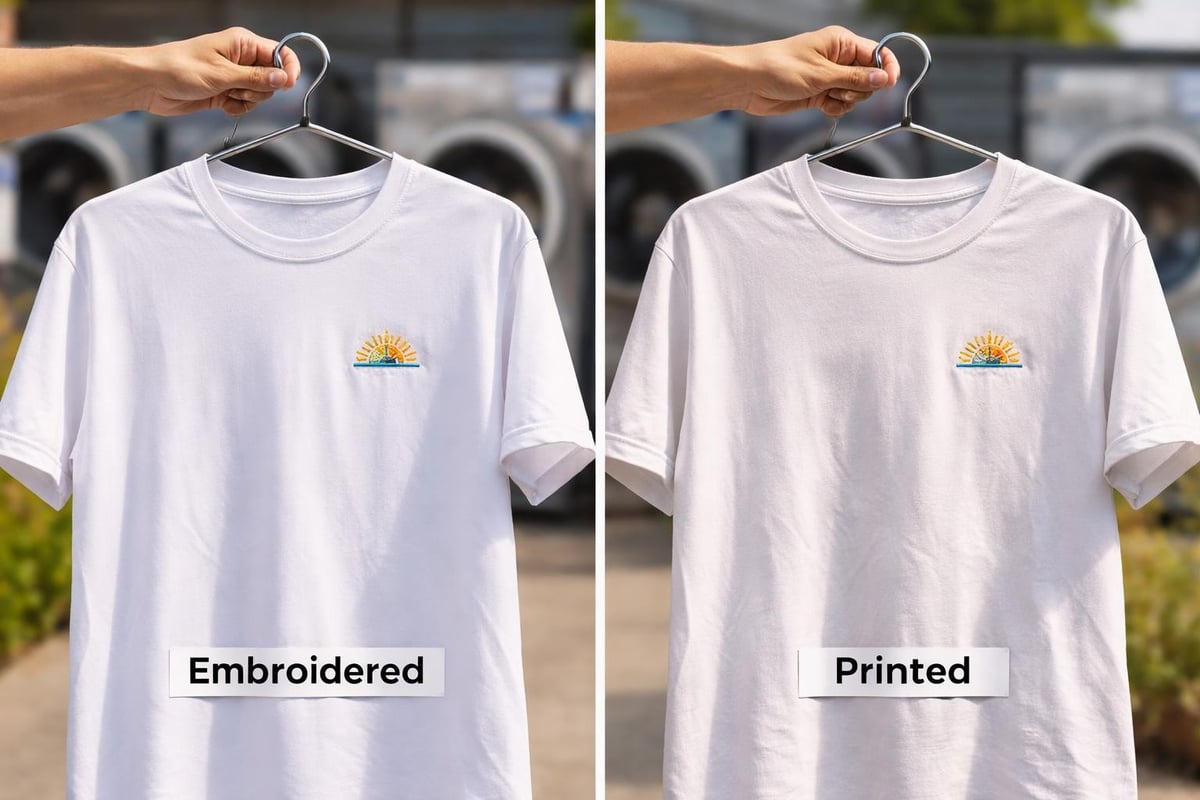
First impressions matter in business contexts. An embroidered logo t shirt conveys professionalism and attention to detail that elevates brand perception. This three-dimensional quality creates visual interest whilst communicating that your organisation values quality over quick, inexpensive solutions.
| Aspect | Embroidery Impact | Business Benefit |
|---|---|---|
| Visual Appeal | Raised, textured design | Premium brand positioning |
| Touch Quality | Tactile, professional feel | Enhanced customer confidence |
| Longevity | Years of consistent appearance | Sustained brand visibility |
| Versatility | Works across garment types | Unified brand identity |
Research consistently demonstrates that embroidered apparel generates higher perceived value amongst customers and employees alike. This perception translates directly into brand equity, making each embroidered logo t shirt a walking advertisement that carries genuine authority.
Creating an effective embroidered design requires understanding the technical constraints and opportunities specific to this medium. Not every logo translates effectively from digital or print formats to embroidered thread.
Embroidery works best with designs that embrace simplicity and clarity. Intricate details, fine lines, and small text can become muddled when translated to thread. Professional logo design for embroidery emphasises bold shapes, adequate spacing, and appropriate sizing to ensure crisp, recognisable results.
Design elements that work well:
Many businesses discover that simplifying their existing logo for embroidery actually strengthens their overall brand identity. This exercise forces focus on the essential elements that make a mark truly recognisable.
Strategic placement maximises visibility whilst maintaining aesthetic balance. Industry embroidery standards provide helpful guidelines for achieving professional results across different garment types and branding objectives.
Common embroidered logo t shirt placements include:
Each position serves different purposes and creates distinct impressions. Corporate environments often favour left chest placement for its subtle professionalism, whilst promotional events might utilise centre chest positioning for maximum impact.
The embroidery landscape continues evolving as fashion influences merge with branding requirements. Understanding current t-shirt embroidery trends helps businesses create garments that feel contemporary whilst maintaining timeless appeal.
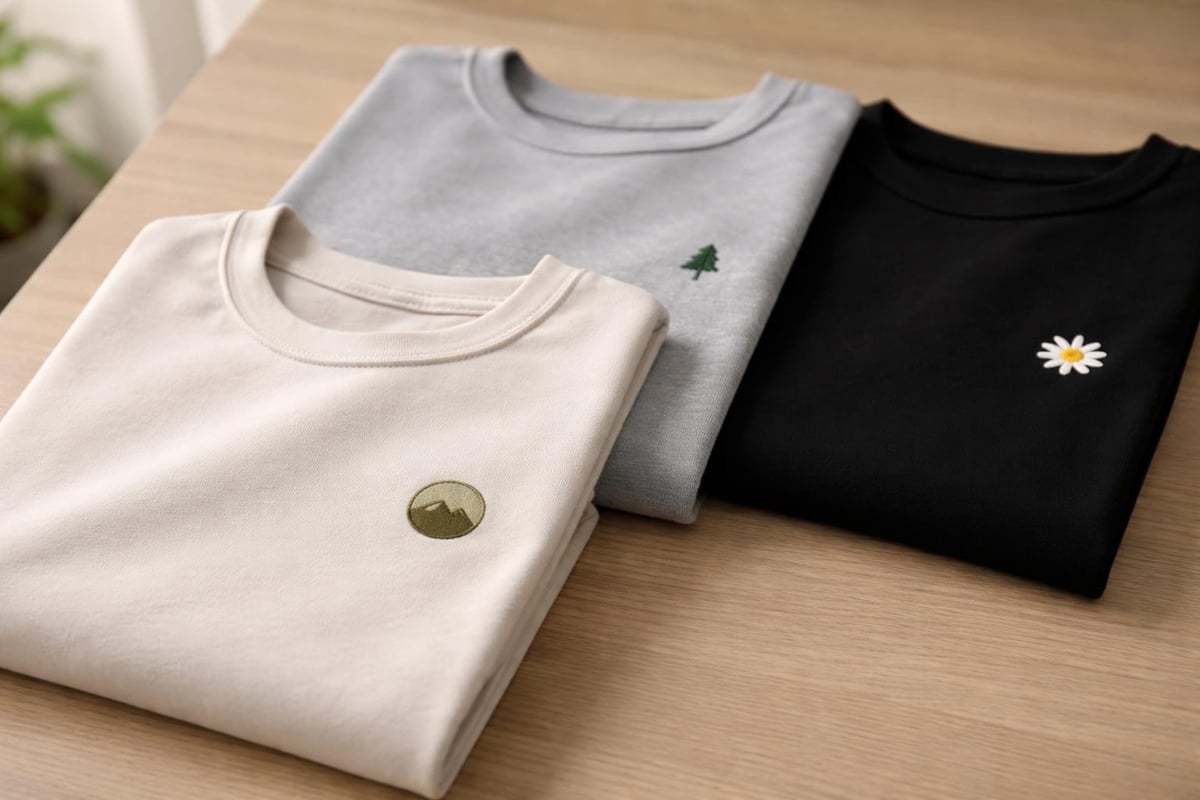
Clean, understated designs dominate 2026 embroidery trends. Small, precisely placed logos create sophisticated branding that resonates with contemporary aesthetic preferences. This minimalist approach proves particularly effective for lifestyle brands, hospitality businesses, and professional services seeking refined brand expression.
The tiny chest patch trend, featured prominently in emerging embroidered shirt designs, demonstrates how restraint can amplify impact. These compact designs, typically 3-5cm in dimension, create an exclusive, members-only feel that enhances brand desirability.
Advanced embroidery techniques now incorporate varied thread weights, 3D puff embroidery, and mixed-texture approaches. These dimensional effects add visual interest whilst maintaining the durability advantages inherent to embroidery.
Popular textural techniques include:
Each technique creates distinct visual signatures that help brands differentiate themselves within crowded markets.
Not all embroidered logo t-shirts deliver equal results. Several technical factors determine whether finished garments meet professional standards or fall short of expectations.
Premium embroidery begins with high-quality thread. Polyester and rayon threads each offer distinct advantages, with polyester providing superior durability and rayon delivering exceptional sheen and colour vibrancy. Understanding production quality factors helps businesses specify requirements that ensure excellent results.
Stitch density directly impacts both appearance and durability. Insufficient density creates gaps and poor coverage, whilst excessive density can pucker fabric and create rigid, uncomfortable areas.
| Stitch Density | Stitches per cm² | Application | Result Quality |
|---|---|---|---|
| Light | 40-60 | Delicate fabrics | Good for lightweight materials |
| Medium | 60-80 | Standard t-shirts | Balanced coverage and flexibility |
| Heavy | 80-100+ | Workwear, caps | Maximum durability and coverage |
Professional embroiderers adjust density based on fabric weight, design complexity, and intended use, ensuring each embroidered logo t shirt achieves optimal results.
The base garment significantly influences embroidery outcomes. Cotton, polyester blends, and performance fabrics each respond differently to the embroidery process. Heavier fabrics generally support embroidery better, whilst lightweight materials may require backing stabilizers to prevent puckering.
Fabric considerations include:
Matching fabric selection to embroidery requirements ensures garments look professional whilst feeling comfortable during wear.
Businesses frequently face the choice between embroidery and various printing methods. Each decoration technique offers distinct advantages depending on design complexity, budget parameters, and intended application. Comparing embroidery and printing illuminates the situations where each method excels.
Certain applications naturally favour embroidered decoration. An embroidered logo t shirt makes particular sense for corporate uniforms, promotional merchandise intended for extended use, and situations where premium perception justifies higher per-unit costs.
Embroidery excels in:
The tactile quality and perceived value of embroidery often justify the investment for businesses prioritising quality over quantity.
Conversely, screen printing, direct-to-garment (DTG), and heat transfer methods offer advantages for large, detailed designs, photographic images, and high-volume orders requiring minimal per-unit costs. Understanding embroidery in custom streetwear contexts reveals how these methods complement rather than compete with embroidery.
Print methods suit:
Many businesses discover that hybrid approaches combining embroidery for logos with printing for additional graphics create the most effective branded apparel.
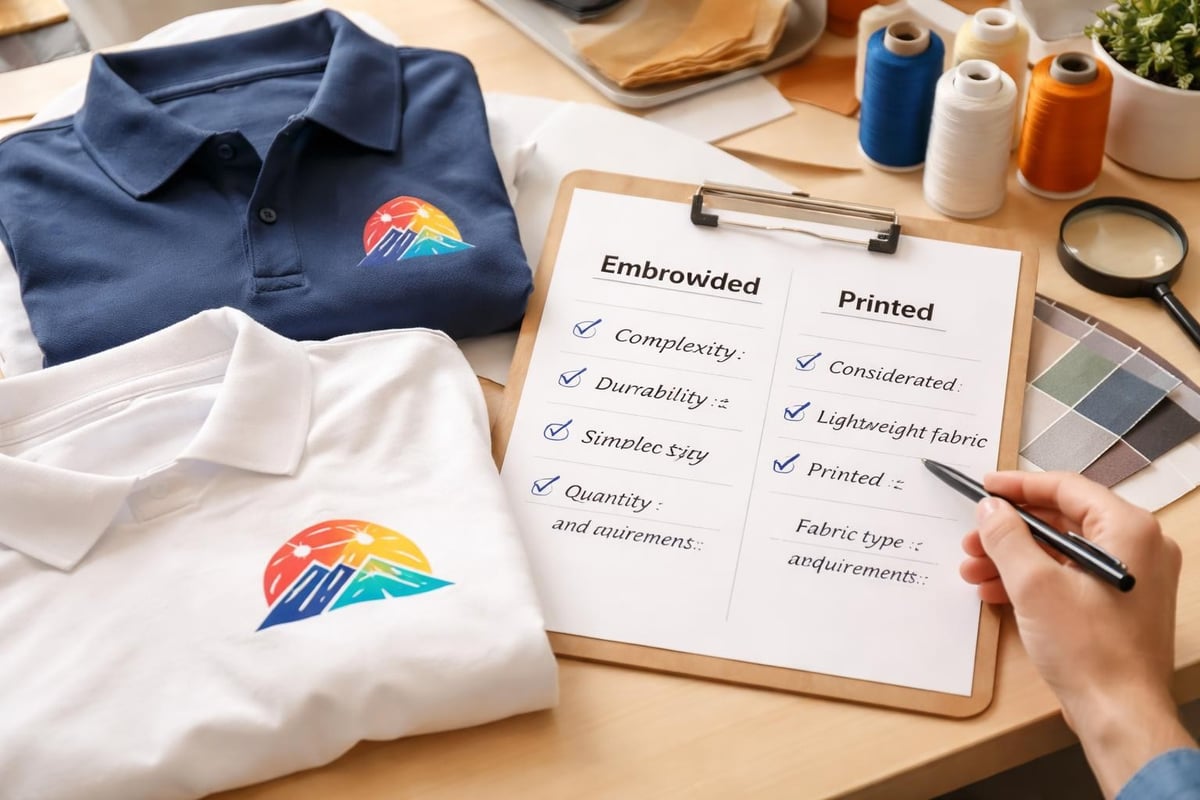
The versatility of an embroidered logo t shirt extends across numerous industries and applications. Each sector leverages embroidery's unique characteristics to achieve specific branding and functional objectives.
Law firms, financial services, consultancies, and corporate offices utilise embroidered polo shirts and t-shirts to create cohesive team identity whilst maintaining professional standards. The subtle sophistication of chest embroidery aligns perfectly with corporate environments where overt branding might seem inappropriate.
Restaurants, hotels, shops, and service businesses rely on embroidered uniforms to create instantly recognisable staff whilst projecting quality and attention to detail. Durable embroidery withstands the rigorous laundering requirements these sectors demand.
School uniforms featuring embroidered logos create pride and belonging whilst ensuring garments maintain appearance throughout academic years. The durability factor proves particularly valuable given the active wear patterns of young people.
Athletic organisations appreciate embroidery's flexibility across performance fabrics and its ability to maintain appearance despite intensive use and repeated washing. Team cohesion strengthens when members wear matching, professionally branded apparel.
Understanding embroidered logo t shirt pricing helps businesses budget appropriately whilst recognising the value proposition embedded in this decoration method.
Embroidery costs typically comprise several elements:
Whilst individual embroidered garments cost more than printed alternatives, the extended lifespan often delivers superior cost-per-wear value. A quality embroidered logo t shirt might survive 200+ wears whilst maintaining professional appearance, whilst printed equivalents may show deterioration after 50-75 washes.
Calculating ROI for branded apparel extends beyond simple cost analysis. Consider factors including:
| ROI Factor | Measurement Approach | Value Contribution |
|---|---|---|
| Longevity | Wears before replacement | Lower lifetime cost |
| Brand Impressions | Daily exposure x garment life | Marketing value |
| Employee Satisfaction | Retention and morale impact | Reduced hiring costs |
| Professional Perception | Customer confidence increase | Revenue enhancement |
Many Birmingham businesses discover that investing in quality embroidered garments generates returns far exceeding the incremental cost difference versus cheaper alternatives.
Successfully executing an embroidered logo t shirt project requires understanding the workflow stages and planning accordingly.
Efficient production begins with proper preparation:
Working with experienced suppliers streamlines this process and helps avoid common pitfalls that delay production or compromise quality.
Rush orders occasionally prove possible, but quality embroidery typically requires adequate production time. Standard timelines include:
Businesses planning events, product launches, or seasonal requirements should allow 3-4 weeks minimum from initial contact to delivery for optimal results without rush charges.
Proper care extends the lifespan of embroidered logo t-shirts whilst preserving their professional appearance.
Care recommendations include:
These simple practices ensure embroidered garments maintain their quality appearance through hundreds of wear cycles, maximising the investment value.
As environmental awareness grows, businesses increasingly evaluate the sustainability implications of their branding choices. Embroidery offers several eco-friendly advantages worth considering.
The longevity inherent in quality embroidered garments reduces consumption and waste. A single embroidered logo t shirt that lasts three years prevents multiple replacement purchases, reducing overall environmental impact. Additionally, embroidery avoids the chemical processes, water consumption, and energy requirements associated with certain printing methods.
Choosing organic cotton or recycled polyester base garments combined with embroidered decoration creates branded apparel that aligns with sustainability commitments whilst maintaining professional quality. Many Birmingham businesses now prioritise these considerations when specifying corporate apparel programmes.
Embroidered logo t-shirts deliver exceptional value through their durability, professional appearance, and versatility across business applications. Whether you're outfitting a corporate team, creating school uniforms, or developing promotional merchandise, the right embroidery approach elevates your brand whilst providing garments that withstand the demands of daily wear. With over a decade of experience in custom embroidered clothing, OK T-Shirt combines expert craftsmanship with fast turnaround times to deliver professional results for Birmingham businesses and beyond.
OK T-Shirt
126 Beeches Rd
Birmingham
B42 2HQ
