Cheap Printed T-Shirts UK: Quality & Value Guide 2026
Discover how to source cheap printed t-shirts UK without compromising…
An embroidered t shirt represents one of the most enduring and professional methods of personalizing garments for businesses, schools, sports teams, and individuals alike. Unlike printing techniques that sit on the fabric surface, embroidery creates a tactile, three-dimensional design that speaks to quality and longevity. With over a decade of refinement in techniques and technology, embroidery has evolved from simple monograms to intricate, multi-coloured designs that can transform ordinary clothing into powerful branding tools or cherished personal items. The precision and permanence of embroidered designs make them particularly valuable for workwear, uniforms, and promotional garments where durability matters as much as appearance.
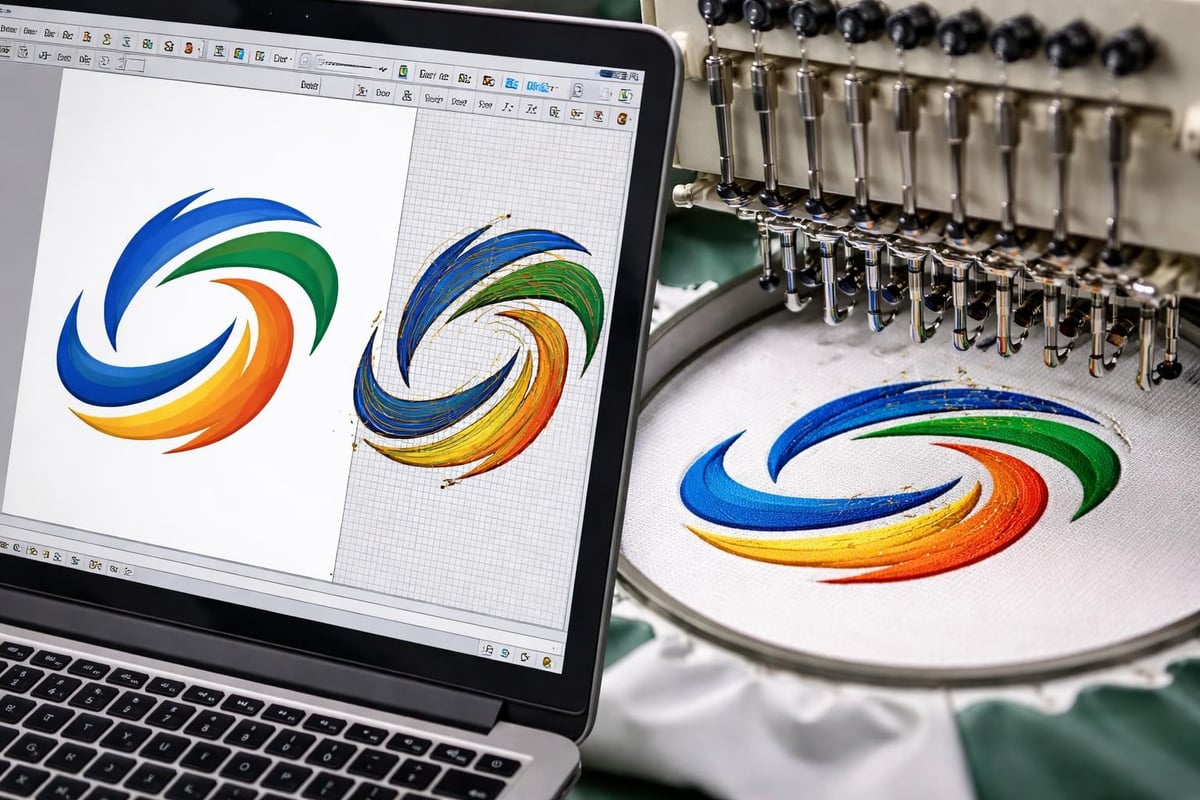
The creation of an embroidered t shirt begins long before the first stitch touches fabric. Professional embroiderers start with digitization, where a graphic design is converted into a stitch file that embroidery machines can read. This critical step determines how the final design will appear, including stitch direction, density, and underlay requirements.
Modern digitizing software allows technicians to optimize designs specifically for different fabric types and weights. The thread path, stitch count, and tension settings all contribute to the final quality. A well-digitized design ensures that lettering remains crisp, logos maintain their integrity, and the fabric doesn't pucker or distort during the embroidery process.
Several factors distinguish exceptional embroidered work from mediocre results:
The relationship between these elements determines whether an embroidered t shirt will maintain its appearance through hundreds of washes or begin deteriorating after just a few cycles. Professional embroiderers understand these technical nuances and adjust their approach based on the specific garment and design requirements.
For businesses seeking professional representation, an embroidered t shirt delivers unmatched credibility. The tactile nature of embroidery conveys permanence and investment, suggesting that a company cares enough about its image to choose the premium customization option. This perception matters significantly in industries where professionalism and attention to detail influence customer trust.
Corporate branding through embroidered garments creates walking advertisements that maintain their appearance far longer than printed alternatives. Employees wearing embroidered workwear project a unified, professional image that reinforces brand recognition at every customer interaction. The durability factor becomes particularly important for companies requiring frequent garment washing or exposure to harsh conditions.
| Application | Key Benefits | Ideal Design Elements |
|---|---|---|
| Corporate uniforms | Professional appearance, long-term durability | Company logos, employee names |
| Sports teams | Washability, team unity | Numbers, team names, mascots |
| Promotional items | Perceived value, lasting impression | Brand logos, website addresses |
| School uniforms | Durability, identity | School crests, house names |
The professional garment customization industry has witnessed significant growth in businesses choosing embroidery for workwear specifically because of these advantages. Unlike screen printing, which can crack or fade, embroidered designs maintain their integrity through industrial washing cycles and daily wear.
Creating an effective embroidered t shirt design requires understanding the medium's unique characteristics and limitations. While embroidery excels at certain types of imagery, it faces challenges with others. Successful designs work with the technique's strengths rather than against them.
Fine details and small text present particular challenges in embroidery. Letters smaller than 6mm in height often lose readability as individual stitches become visible rather than forming cohesive characters. Similarly, highly detailed photographic images don't translate well to stitching, as the medium works best with bold shapes and clear colour separation.
Colour selection impacts both aesthetics and cost. Each colour change requires the machine to stop, cut the current thread, and load a new one. Designs with numerous colours increase both production time and expense. Strategic colour choices can create impressive visual impact whilst maintaining production efficiency.
The placement of embroidery also influences the garment's wearability and appearance. Left chest placement remains the most popular position for corporate logos due to its visibility and professional associations. Sleeve embroidery works well for team numbers or secondary branding. Full back designs create dramatic statements but require careful consideration of design size and weight to prevent fabric stress.
The embroidered t shirt market continues evolving with fresh design approaches and technical innovations. Contemporary embroidery trends for 2026 emphasize sustainability, textured stitching techniques, and the integration of technology with traditional craftsmanship. These developments reflect broader shifts in consumer preferences toward authenticity and environmental consciousness.
Minimalist designs have gained significant traction, moving away from large, elaborate embroidery toward subtle, sophisticated applications. Small chest placements, single-colour work, and negative space utilization create refined aesthetics that appeal to contemporary tastes. This approach also reduces production costs and environmental impact whilst maintaining the premium perception embroidery provides.
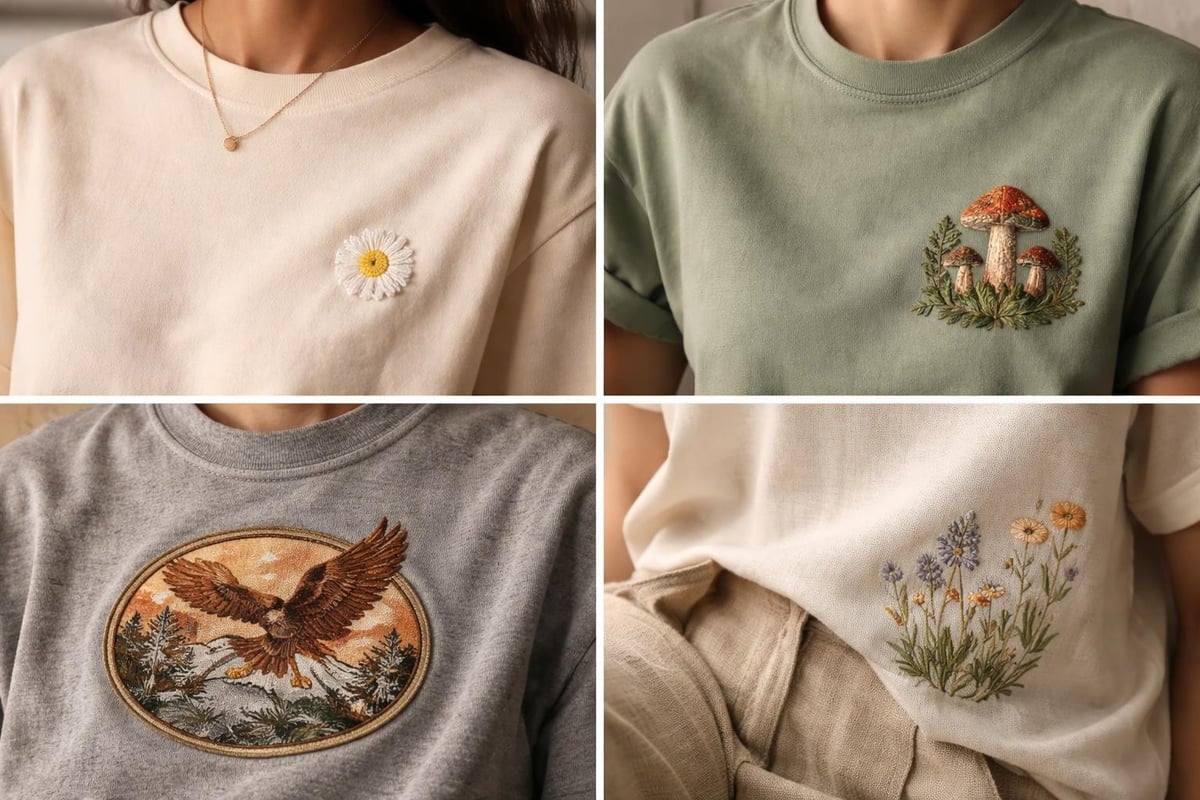
The evolution of embroidery aesthetics reveals several distinct movements influencing custom apparel:
Sustainability concerns have prompted the embroidery industry to adopt eco-friendly practices, including organic cotton garments, recycled polyester threads, and water-based backing materials. Consumers increasingly value brands that demonstrate environmental responsibility, and embroidery's inherent longevity aligns naturally with sustainable consumption principles.
When comparing customization techniques, an embroidered t shirt offers distinct advantages that justify its premium positioning. The physical structure of embroidery creates a three-dimensional design that resists fading, cracking, or peeling. Unlike screen printing, where ink sits atop fabric fibres, embroidery actually penetrates the material, creating mechanical bonds that withstand extensive wear.
Durability testing consistently demonstrates embroidery's superior longevity. Professional-grade embroidered garments maintain design integrity through 50-100 commercial wash cycles, whilst many printed alternatives show significant deterioration after 20-30 washes. For businesses investing in uniforms or promotional apparel, this extended lifespan represents substantial long-term value.
The tactile quality of embroidery also contributes to perceived value. Recipients of embroidered promotional items consistently rate them higher in quality surveys compared to printed equivalents. This perception influences how the branded message is received and retained, making embroidery particularly valuable for relationship-building and customer appreciation initiatives.
| Decoration Method | Durability | Detail Level | Best Applications |
|---|---|---|---|
| Embroidery | Excellent (50+ washes) | Moderate (bold designs) | Corporate wear, uniforms, caps |
| Screen Printing | Good (20-30 washes) | High (fine details) | Large designs, events, retail |
| DTG Printing | Moderate (15-25 washes) | Very High (photos) | Small runs, complex images |
| Heat Transfer | Fair (10-20 washes) | High (detailed graphics) | Numbers, names, quick orders |
Not all t-shirts accept embroidery equally well. Fabric composition, weight, and construction significantly influence the final result. Professional embroiderers assess garment suitability before beginning work, as inappropriate fabric choices lead to puckering, distortion, or inadequate design support.
Cotton piqué fabrics, commonly used in polo shirts, provide excellent embroidery surfaces due to their density and structure. The tight weave supports stitching without excessive stabilizer requirements. Similarly, heavyweight cotton t-shirts (180-200 GSM) offer sufficient substance for quality embroidery without requiring extensive backing materials.
Lightweight fabrics present greater challenges. Thin jersey knits require careful stabilization to prevent the fabric from tunnelling or gathering around dense stitching. Performance fabrics with moisture-wicking properties need specialized techniques to maintain both the fabric's functional properties and the embroidery's appearance.
Colour selection extends beyond aesthetics to practical considerations. Dark garments require higher stitch density to achieve full colour coverage, particularly with lighter thread colours. Understanding these technical requirements helps create realistic design expectations and prevents disappointment with the final product.
Technological advancement has revolutionized machine embroidery, transforming it from a labour-intensive craft to a precision manufacturing process. Contemporary multi-head embroidery machines can complete complex designs in minutes rather than hours, whilst maintaining consistency across hundreds or thousands of units. This efficiency makes custom embroidered t shirts accessible for businesses of all sizes.
Computer-controlled machines monitor thread tension, automatically trim jump stitches, and detect thread breaks during operation. These capabilities ensure consistent quality across production runs and minimize waste. The integration of artificial intelligence enables machines to adjust parameters in real-time, optimizing stitch formation based on fabric feedback.
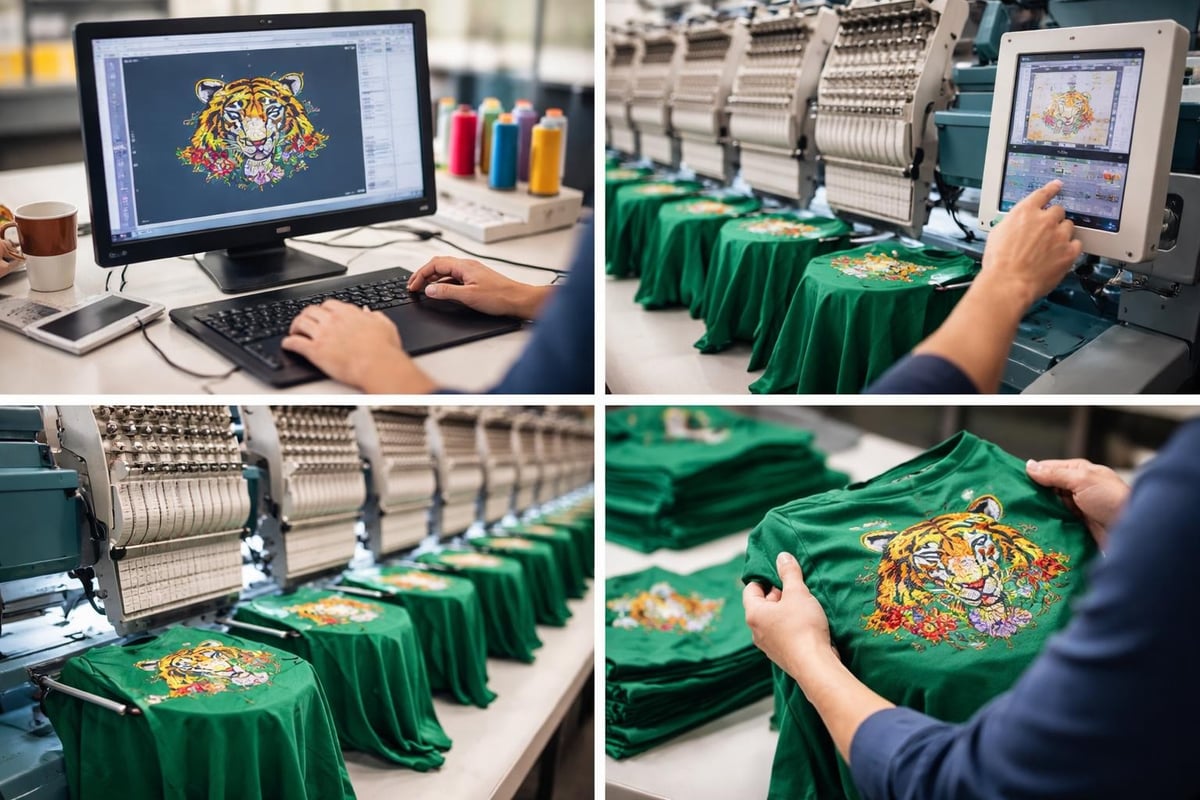
Design software continues evolving with features that simplify the creation process. Auto-digitizing functions convert vector graphics into stitch files with minimal manual intervention, though experienced digitizers still refine these automatic conversions for optimal results. 3D visualization tools allow customers to preview how designs will appear on actual garments before production begins, reducing revision cycles and improving satisfaction.
The profitability and demand for custom embroidered designs continues growing as technology reduces costs whilst improving quality. This democratization of embroidery services means small businesses and community organizations can access professional customization previously available only to large corporations.
Professional embroidery services implement rigorous quality standards to ensure every embroidered t shirt meets specifications. Visual inspection remains essential despite technological advancement, as human evaluators identify subtle issues that automated systems might miss. Experienced quality controllers examine thread tension, stitch density, colour accuracy, and overall design placement.
Registration accuracy determines whether multi-colour designs align properly or appear misaligned and unprofessional. Modern embroidery machines maintain positioning accuracy within 0.1mm, but design digitization quality influences how effectively this precision translates to the finished garment. Poorly digitized files can result in gaps between colour sections or overlapping stitches that create bulk.
Thread colour matching requires both technical skill and aesthetic judgment. Standard thread colour charts provide references, but variations in lighting, fabric colour, and thread sheen affect perceived matches. Professional services often create sample stitchouts to verify colour selections before committing to full production runs, particularly for corporate branding where colour consistency matters significantly.
An embroidered t shirt requires specific care to maintain its appearance through extended use. Whilst embroidery proves remarkably durable, proper laundering techniques preserve both the stitching and the underlying fabric. Understanding these requirements helps businesses and individuals maximize their investment in custom garments.
Washing embroidered garments inside-out protects the threads from abrasion against other clothes and machine components. This simple step significantly extends design life. Cold or warm water proves preferable to hot, as excessive heat can weaken thread fibres and cause colours to fade prematurely. Avoiding chlorine bleach prevents colour degradation and maintains thread strength.
Drying methods influence longevity as well. Whilst embroidered garments withstand tumble drying, air drying reduces stress on both fabric and stitching. High heat settings can cause synthetic threads to lose their lustre and potentially melt if temperatures become excessive. For businesses managing uniform programmes, establishing clear care guidelines ensures consistent garment appearance across the organization.
Ironing embroidered designs requires caution. Pressing directly on embroidery can flatten stitches and reduce their dimensional quality. Ironing from the reverse side or using a pressing cloth protects the design whilst removing wrinkles from the surrounding fabric. Professional finishers use specialized equipment that steams garments without applying direct pressure to embroidered areas.
Pricing for an embroidered t shirt reflects multiple variables beyond simple stitch count. Setup costs include digitizing the design, loading the file into embroidery machines, and configuring colour sequences. These fixed costs distribute across order quantities, making larger orders more cost-effective per unit. Understanding this pricing structure helps businesses plan their custom garment investments strategically.
Stitch count directly impacts production time and therefore cost. Larger designs with higher stitch densities require more machine time than simple, smaller applications. However, the relationship isn't purely linear, as machine setup and colour changes also consume time. A small design with six colours might cost more than a larger single-colour design with a similar overall stitch count.
Garment selection influences total project costs significantly. Premium brands and specialized performance fabrics carry higher base prices than standard options. Balancing garment quality with decoration costs ensures the final product meets both budget constraints and quality expectations. For custom printed and embroidered clothing projects, consulting with experienced providers helps identify optimal combinations of garment selection and decoration techniques.
| Order Quantity | Per-Unit Digitizing Cost | Per-Unit Production Cost | Total Per-Unit Cost |
|---|---|---|---|
| 12 units | £4.17 | £6.50 | £10.67 |
| 50 units | £1.00 | £6.00 | £7.00 |
| 100 units | £0.50 | £5.50 | £6.00 |
| 500 units | £0.10 | £5.00 | £5.10 |
These representative figures demonstrate how economies of scale benefit larger orders. Businesses planning ongoing uniform programmes benefit from ordering sufficient quantities to maximize value whilst maintaining adequate inventory.
Different industries present unique requirements for embroidered t shirts that influence design decisions, garment selection, and production specifications. Healthcare facilities prioritize easy-care fabrics that withstand frequent commercial laundering, whilst retail environments might emphasize fashion-forward styling that aligns with brand aesthetics.
Construction and trades industries require durable workwear fabrics that support embroidery whilst resisting jobsite hazards. High-visibility garments demand specialized placement considerations to ensure embroidery doesn't interfere with reflective materials. The influence of industry-specific needs shapes design choices and technical approaches to embroidery application.
Educational institutions represent substantial markets for embroidered garments, from school uniforms to athletic team apparel. These applications often require precise colour matching to institutional standards and consistent reproduction across multiple garment types and sizes. Durability remains paramount, as student garments typically endure heavy wear and frequent washing.
Hospitality industries utilize embroidered uniforms to project professionalism whilst maintaining brand consistency across multiple locations. Staff members in customer-facing roles particularly benefit from the polished appearance embroidery provides. The permanence of embroidered branding ensures consistent representation regardless of garment age or wear frequency.
The embroidered t shirt industry increasingly addresses environmental concerns through material selection and process optimization. Unlike some printing methods that require chemical treatments or generate hazardous waste, embroidery creates minimal environmental impact during application. The primary considerations involve thread production, backing materials, and energy consumption during manufacturing.
Organic cotton garments combined with recycled polyester threads create sustainable product options that appeal to environmentally conscious consumers. These materials maintain the quality and durability expected from embroidered products whilst reducing ecological footprints. Water-soluble stabilizers eliminate the need for tear-away backings that generate waste, further improving environmental profiles.
Energy-efficient embroidery machines reduce operational carbon footprints. Modern equipment consumes significantly less power than older models whilst maintaining or improving production speeds. LED lighting in production facilities and optimized climate control contribute to overall sustainability efforts. Businesses seeking to enhance their environmental credentials find embroidery aligns well with these objectives.
The longevity of embroidered garments inherently supports sustainability principles. Products that remain attractive and functional through years of use reduce consumption and waste compared to disposable alternatives. This durability represents perhaps the most significant environmental benefit embroidery offers, as extending product lifecycles proves more impactful than marginal improvements in production processes.
Creating exceptional embroidered t shirts requires understanding technical processes, design principles, and quality standards that transform ordinary garments into powerful branding tools or cherished personal items. Whether you need corporate uniforms, promotional apparel, or custom designs for special occasions, professional embroidery delivers durability and visual impact that justifies the investment. With over a decade of expertise in custom embroidered and printed clothing, OK T-Shirt combines technical precision with fast turnaround times to help Birmingham businesses and organizations create professional garments that represent their brands with lasting quality and style.

OK T-Shirt
126 Beeches Rd
Birmingham
B42 2HQ
