Cheap Printed T-Shirts UK: Quality & Value Guide 2026
Discover how to source cheap printed t-shirts UK without compromising…
The personalised embroidered t shirt has evolved from a simple customisation option into a sophisticated fashion statement and powerful branding tool. Whether you're looking to create unique merchandise for your business, commemorate a special event, or simply express your individual style, embroidered t-shirts offer a premium alternative to standard printing methods. With advances in embroidery technology and an increasing appetite for personalised fashion among younger consumers, the market for custom embroidered apparel continues to flourish. This comprehensive guide explores everything you need to know about creating exceptional personalised embroidered t-shirts in 2026.
When selecting a personalisation technique for your t-shirt project, understanding the distinct advantages of embroidery helps ensure you make the right choice. Unlike screen printing or heat transfer, embroidery uses coloured threads to stitch designs directly into fabric, creating a three-dimensional, textured appearance that exudes quality.
Embroidery offers unmatched durability compared to printed alternatives. The stitched threads become part of the fabric itself, resisting fading, cracking, and peeling even after hundreds of wash cycles. This longevity makes the personalised embroidered t shirt ideal for workwear, uniforms, and promotional items that need to maintain their appearance over extended periods.
Professional garments benefit enormously from this durability. Employees wearing embroidered company logos project a consistent, polished image that reinforces brand identity day after day. The investment in embroidery pays dividends through reduced replacement costs and sustained brand visibility.
The tactile, raised quality of embroidered designs creates an immediate perception of value. When recipients touch a personalised embroidered t shirt, they experience the craftsmanship firsthand. This sensory element elevates the perceived quality beyond what flat printing can achieve.
| Feature | Embroidery | Screen Printing | Heat Transfer |
|---|---|---|---|
| Durability | Excellent (500+ washes) | Good (50-100 washes) | Fair (25-50 washes) |
| Texture | 3D raised design | Flat surface | Flat or slightly raised |
| Best For | Logos, text, small details | Large graphics, multiple colors | Photos, complex images |
| Cost Efficiency | Better for small quantities | Better for large runs | Mid-range quantities |
Not all t-shirt materials respond equally to embroidery techniques. The compatibility between fabric type and embroidery methods significantly impacts the final result, affecting everything from stitch definition to garment longevity.
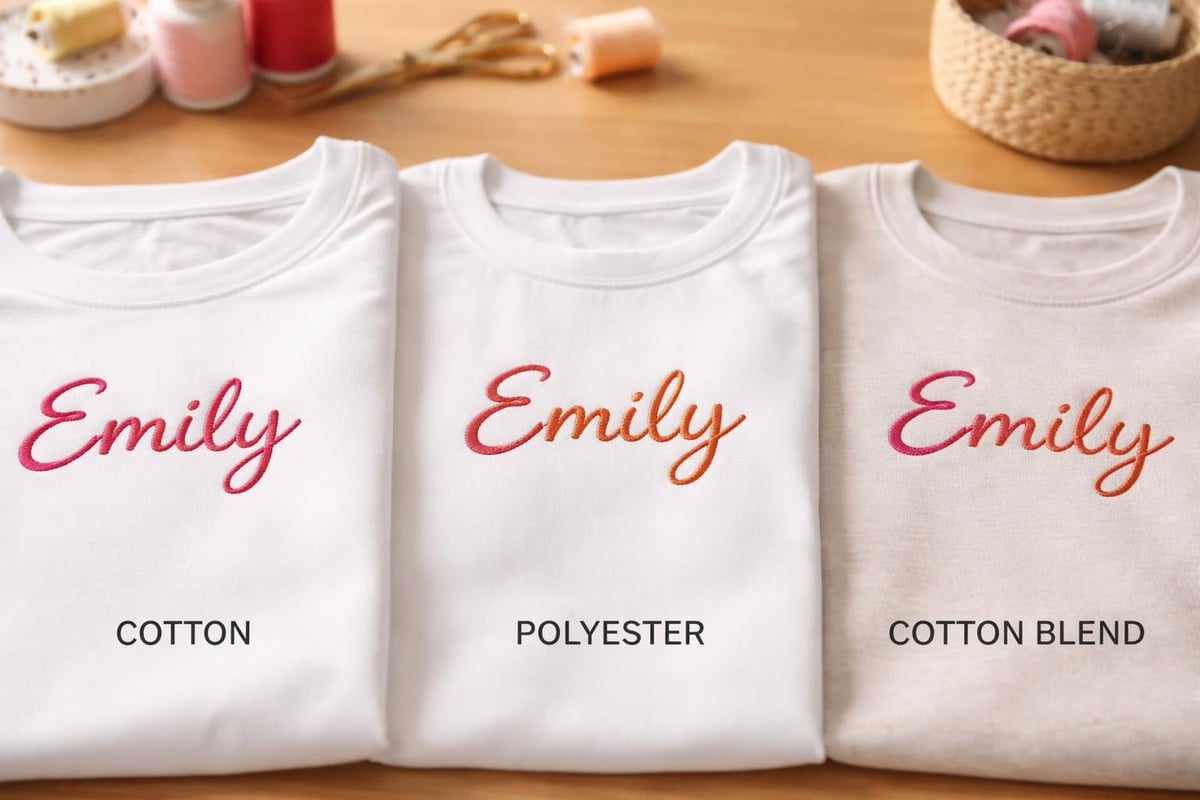
Pure cotton remains the most popular fabric for personalised embroidered t shirts. Its natural fibres provide excellent stability during the embroidery process, allowing needles to penetrate cleanly without causing puckering or distortion. Cotton also feels comfortable against the skin and breathes well, making it ideal for everyday wear.
Key cotton benefits include:
Medium-weight cotton (approximately 180-220 GSM) offers the best balance between stability and comfort for embroidery work. Lighter fabrics may require additional stabilisation, whilst heavier cotton provides a canvas-like surface perfect for intricate designs.
Synthetic and blended fabrics present different considerations for embroidery projects. Polyester t-shirts offer moisture-wicking properties ideal for sportswear and active garments, though they require careful handling to prevent heat damage from embroidery equipment.
Cotton-polyester blends combine the best attributes of both materials. A 65/35 or 50/50 blend provides cotton's embroidery-friendly properties whilst gaining polyester's shape retention and wrinkle resistance. These blends have become increasingly popular for corporate workwear and team uniforms.
Creating an effective design for your personalised embroidered t shirt requires understanding the unique capabilities and limitations of embroidery as a medium. Current embroidery trends favour both minimalist approaches and bold statement pieces, giving you creative flexibility.
Logo size matters tremendously in embroidery. Designs between 3-4 inches wide typically work best for left chest placement, whilst larger back designs can extend to 10-12 inches. Tiny details smaller than 3mm often don't translate well, as individual stitches have physical limitations.
Common placement options include:
Thread selection dramatically influences the final appearance of your personalised embroidered t shirt. Standard polyester threads offer excellent colour fastness and sheen, whilst rayon threads provide superior lustre for premium applications. Metallic threads add eye-catching sparkle but require experienced handling.
Limiting your design to 4-6 colours typically yields the best results. Each colour change requires the embroidery machine to stop and rethread, adding time and potential registration issues. Thoughtful colour selection ensures your design pops whilst maintaining production efficiency.
Companies across industries recognise the value of personalised t-shirts for business branding. A well-designed personalised embroidered t shirt transforms employees into walking advertisements whilst fostering team unity and professional appearance.
Consistent brand presentation across all customer touchpoints strengthens recognition and recall. When your team wears embroidered company apparel, they project professionalism and credibility. This visual consistency reassures customers that they're dealing with an established, trustworthy organisation.
The three-dimensional nature of embroidery makes logos more memorable than flat printed versions. The texture catches light differently from various angles, naturally drawing the eye and creating deeper impression retention amongst those who see it.
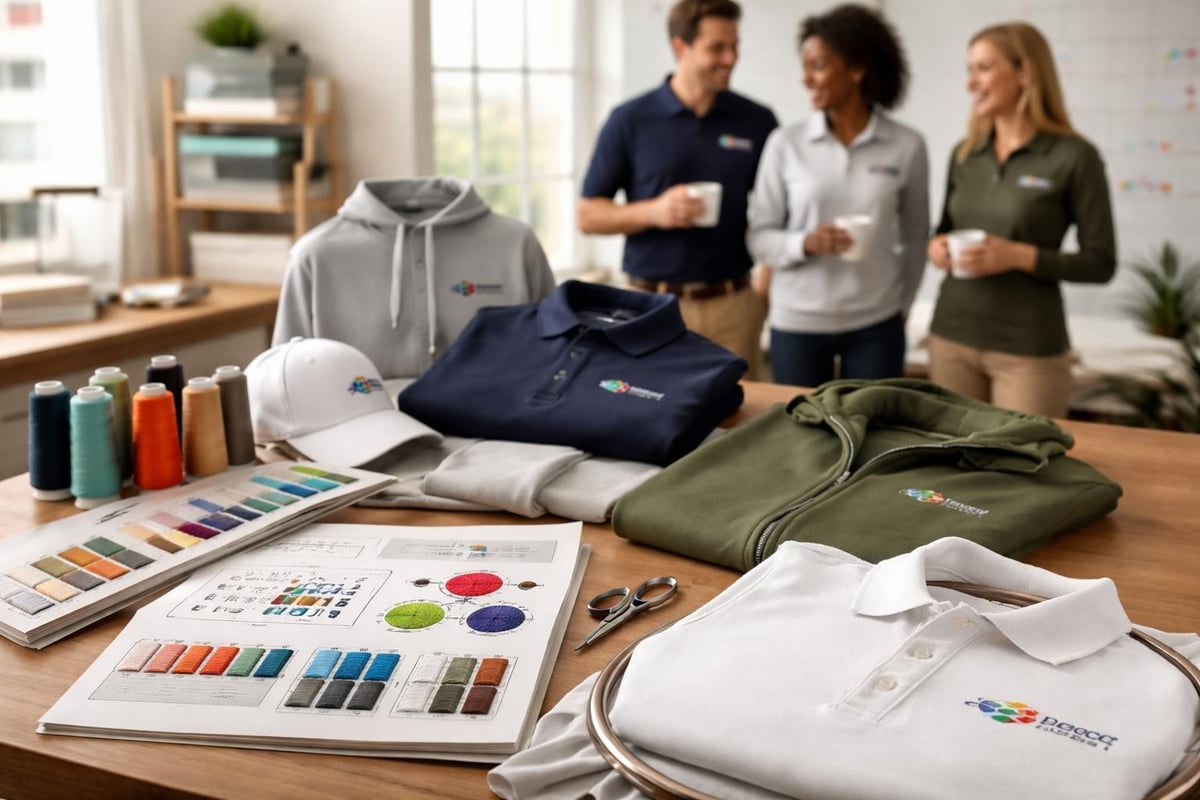
Compared to traditional advertising channels, personalised embroidered t shirts offer exceptional return on investment. A single garment generates thousands of impressions over its lifetime as wearers go about their daily activities. This passive marketing continues working long after the initial investment.
| Marketing Channel | Approximate Cost Per Impression | Longevity |
|---|---|---|
| Embroidered T-Shirts | £0.002-£0.005 | 2-5 years |
| Social Media Ads | £0.08-£0.15 | 24-48 hours |
| Billboard Advertising | £0.03-£0.06 | 4 weeks |
| Print Magazine Ads | £0.10-£0.20 | 1 month |
Teams wearing matching personalised embroidered t shirts develop stronger bonds and group identity. This psychological effect shouldn't be underestimated, particularly in customer-facing roles where confidence and cohesion directly impact service quality.
The custom apparel market continues expanding, with embroidered designs playing a central role. Understanding current trends helps ensure your personalised embroidered t shirt feels contemporary rather than dated.
Simplicity reigns supreme in 2026. Small, understated embroidered logos positioned on the left chest or sleeve create sophisticated appeal. Single-colour embroidery in contrasting threads offers timeless elegance that transcends seasonal fashion changes.
This minimalist approach works particularly well for premium brands wanting to convey luxury without ostentation. A small, perfectly executed embroidered detail speaks volumes about quality and attention to detail.
Nostalgia continues influencing fashion choices, with embroidered designs mimicking vintage patches and collegiate lettering. These emerging embroidery trends combine old-school charm with modern execution, appealing to consumers seeking authenticity and heritage.
Popular vintage-inspired elements include:
Beyond corporate branding, consumers increasingly want personalised embroidered t shirts featuring names, dates, and personal messages. This hyper-personalisation trend reflects the broader movement towards unique, one-of-a-kind fashion items that tell individual stories.
Advanced embroidery equipment makes small-batch and even single-item personalisation economically viable. This capability opens opportunities for gift markets, special events, and commemorative apparel.
Understanding the technical elements that contribute to excellent embroidery results helps you appreciate what separates exceptional personalised embroidered t shirts from mediocre ones.
Before any stitching begins, designs must be digitised into embroidery files. This process converts artwork into stitch commands that embroidery machines can execute. Professional digitising considers fabric type, design size, and stitch density to optimise results.
Poor digitising causes numerous problems including puckering, thread breaks, and distorted designs. Experienced digitisers adjust stitch angles, underlay stitches, and pull compensation to account for how different fabrics respond during embroidery.
Proper stabilisation prevents fabric distortion during the embroidery process. Stabiliser materials support the fabric whilst needles punch through, ensuring stitches form correctly without pulling or puckering the base material.
Different projects require different stabilisation approaches:
Achieving perfect stitch formation requires precise thread tension balance. Too tight and stitches pull the fabric, creating puckering. Too loose and stitches appear messy and poorly defined. Professional embroiderers constantly monitor and adjust tension throughout production.
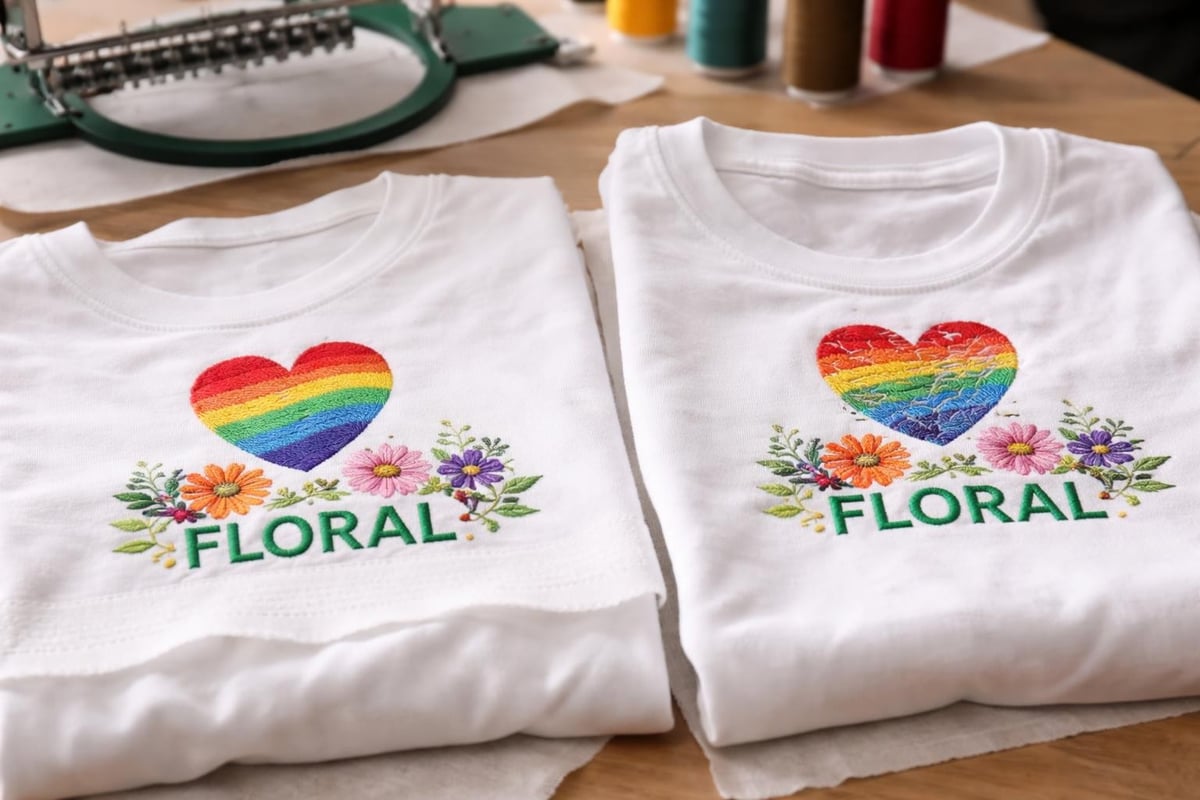
Proper care extends the life of your personalised embroidered t shirt significantly. Following these best practices for embroidered garment care ensures your investment maintains its appearance for years.
Always turn embroidered t-shirts inside out before washing. This simple step protects the embroidery from abrasion against other garments and the washing machine drum. Use cold or warm water rather than hot, as excessive heat can damage threads and cause colours to fade prematurely.
Essential washing tips:
Air drying proves gentlest for embroidered garments. If using a tumble dryer, select low heat and remove items whilst slightly damp. High heat can cause synthetic threads to melt or shrink, distorting your design.
When ironing becomes necessary, always iron the reverse side of embroidered areas. Direct heat on embroidery can flatten stitches and damage thread lustre. Placing a pressing cloth between the iron and fabric provides additional protection.
Selecting an experienced embroidery provider ensures your personalised embroidered t shirt meets expectations. With over a decade of expertise in custom garment decoration, quality providers understand the nuances that separate excellent results from disappointing ones.
Established companies bring invaluable knowledge to your project. They guide fabric selection, suggest design modifications that improve embroidery results, and anticipate potential issues before production begins. This consultative approach saves time, money, and frustration.
Look for providers offering:
Modern embroidery machines produce far superior results compared to older equipment. Multi-head machines enable efficient production whilst maintaining consistent quality across large orders. Advanced software allows precise colour matching and stitch optimization.
The best providers invest continuously in equipment upgrades and staff training. This commitment to improvement ensures you benefit from the latest embroidery techniques and capabilities.
Whilst fashion represents a significant market, personalised embroidered t shirts serve numerous other purposes that extend their value proposition considerably.
Schools and universities use embroidered t-shirts for uniforms, sports teams, and event merchandise. The durability of embroidery ensures garments survive the rigours of student life whilst maintaining smart appearance throughout the academic year.
Companies attending exhibitions and conferences equip staff with embroidered apparel that creates cohesive brand presentation. This professional appearance distinguishes your team from competitors whilst making staff easily identifiable to potential customers.
Non-profit organisations leverage personalised embroidered t shirts for fundraising campaigns and awareness events. The premium quality of embroidery justifies higher price points, increasing profit margins whilst creating merchandise supporters proudly wear repeatedly.
The embroidery industry continues evolving with technological advances promising even greater capabilities. Research into innovative textile customisation systems suggests exciting possibilities for future personalised apparel applications.
Artificial intelligence increasingly influences design creation, with algorithms generating custom patterns based on user preferences. These AI-powered tools democratise design, allowing individuals without artistic training to create professional-quality embroidery artwork.
Sustainable practices gain prominence as consumers demand environmentally responsible production. Recycled threads, water-based stabilisers, and energy-efficient machines reduce the environmental impact of creating personalised embroidered t shirts without compromising quality.
Creating a personalised embroidered t shirt that perfectly captures your vision requires careful consideration of fabrics, designs, and production techniques. Whether you're building brand recognition, celebrating a special occasion, or expressing individual style, embroidered apparel offers lasting quality and premium appeal that other customisation methods struggle to match. OK T-Shirt brings over 10 years of embroidery expertise to every project, combining advanced technology with personalised service to deliver exceptional results with fast turnaround times. From initial design consultation through final production, their Birmingham-based team ensures your custom embroidered clothing exceeds expectations.
OK T-Shirt
126 Beeches Rd
Birmingham
B42 2HQ
