Cheap Printed T-Shirts UK: Quality & Value Guide 2026
Discover how to source cheap printed t-shirts UK without compromising…
The t-shirt digital revolution is reshaping fashion in 2025, with custom designs and rapid printing more accessible than ever. What makes this trend so exciting? Personalised T-shirts are now everywhere, from streetwear to business uniforms, thanks to cutting-edge technology.
As traditional methods give way to digital printing, the process is faster, more flexible, and eco-friendly. This shift matters right now, as both individuals and brands seek unique, high-quality apparel with ease.
In this guide, you’ll discover everything about t shirt digital printing for 2025. Explore the latest tech, design trends, garment choices, ordering steps, sustainability, and factors that impact cost. Ready to create your perfect T-shirt? Read on for expert insights.
Digital T-shirt printing has undergone a remarkable transformation over the past decade. In the early 2010s, traditional methods dominated the market, but by 2025, t shirt digital technology has become the preferred choice for both individuals and businesses. Advancements in printing technology, consumer demand for customisation, and a growing focus on sustainability drive this shift.
The primary difference between traditional screen printing and t shirt digital techniques lies in flexibility and efficiency. Screen printing requires separate screens for each colour, making it ideal for large batches but less practical for small orders or intricate designs. In contrast, t shirt digital printing handles complex, multi-colour graphics with ease and minimal setup. The table below summarises the key distinctions:
Feature | Screen Printing | Digital Printing |
|---|---|---|
Setup Time | High | Low |
Minimum Order | Large batches | Single or small batch |
Design Complexity | Limited | Unlimited |
Print Quality | Flat, bold colours | Photorealistic, detailed |
Turnaround Time | Longer | Faster |
Modern t-shirt digital printing encompasses several key technologies. Direct-to-Garment (DTG) printing applies ink directly to fabric, producing vivid, high-resolution images. Direct-to-Film (DTF) offers versatility by transferring designs onto a film before application, making it suitable for a wide range of fabrics. Sublimation printing, meanwhile, infuses ink into polyester fibres, resulting in durable and vibrant prints. Each method is chosen based on the desired effect, garment material, and project scale.
One of the most significant advantages of t shirt digital printing is its adaptability. Whether you need a single custom shirt or a limited run for an event, digital methods offer speed and flexibility. Innovations in 2025 have further enhanced print resolution, allowing for sharper images and more accurate colour reproduction. Eco-friendly inks are now standard in many studios, and production times have dropped dramatically, sometimes enabling same-day delivery. For example, comparing print quality between 2015 and 2025 reveals a leap from basic colour fidelity to near photographic precision, making t shirt digital prints indistinguishable from high-end retail garments.
The rise of t shirt digital printing is reflected in industry statistics. The UK custom T-shirt market has grown steadily, with digital methods now accounting for the majority of orders. According to recent reports, the global custom T-shirt printing market is expected to surpass USD 11.8 billion by 2032, mainly driven by digital adoption. This technology has democratised access, enabling small businesses, creators, and individuals to launch bespoke products with minimal upfront investment. For a deeper look at the differences between methods, the Digital vs Traditional Printing Methods guide offers comprehensive insights.
T shirt digital printing in 2025 is not just a technical upgrade; it has fundamentally changed how people think about fashion, branding, and personal expression. With improved accessibility, quality, and environmental responsibility, digital printing is set to remain at the forefront of custom apparel for years to come.
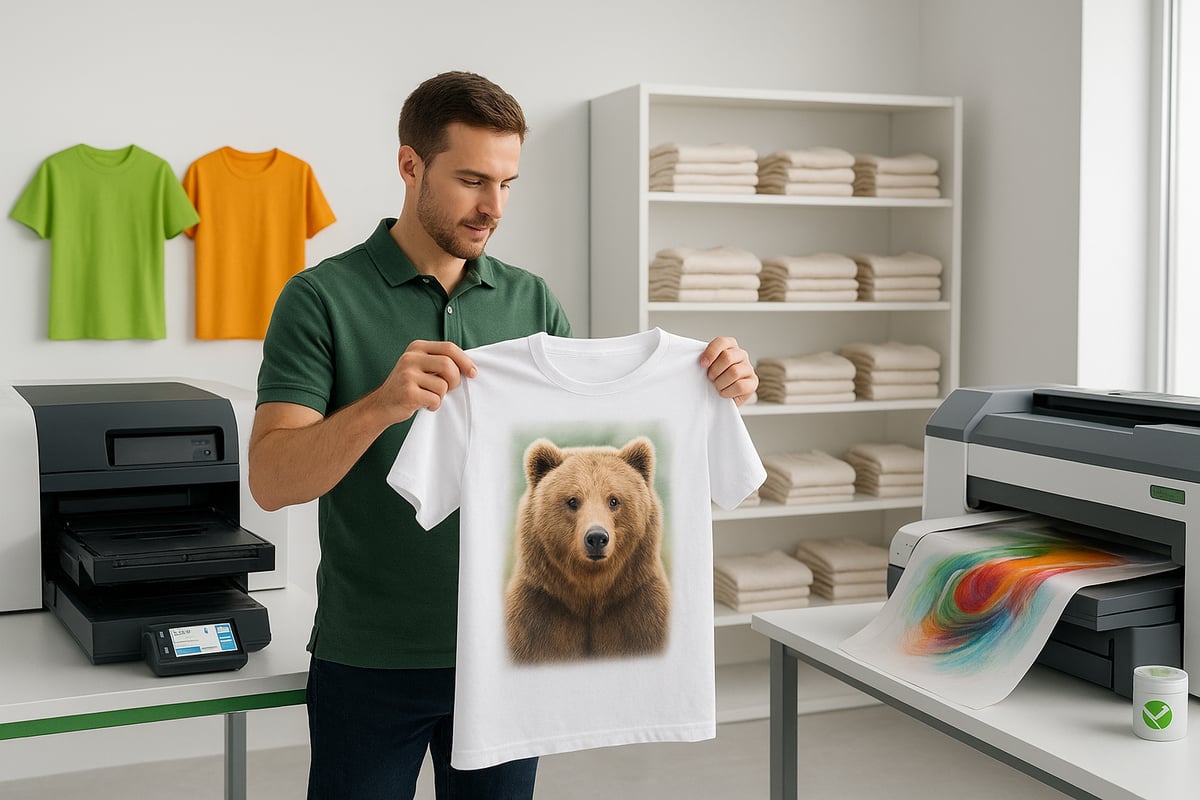
Digital T-shirt design in 2025 is a vibrant landscape shaped by innovation, technology, and changing consumer preferences. The t shirt digital market is thriving, offering limitless creative possibilities and personal expression for individuals and businesses alike.
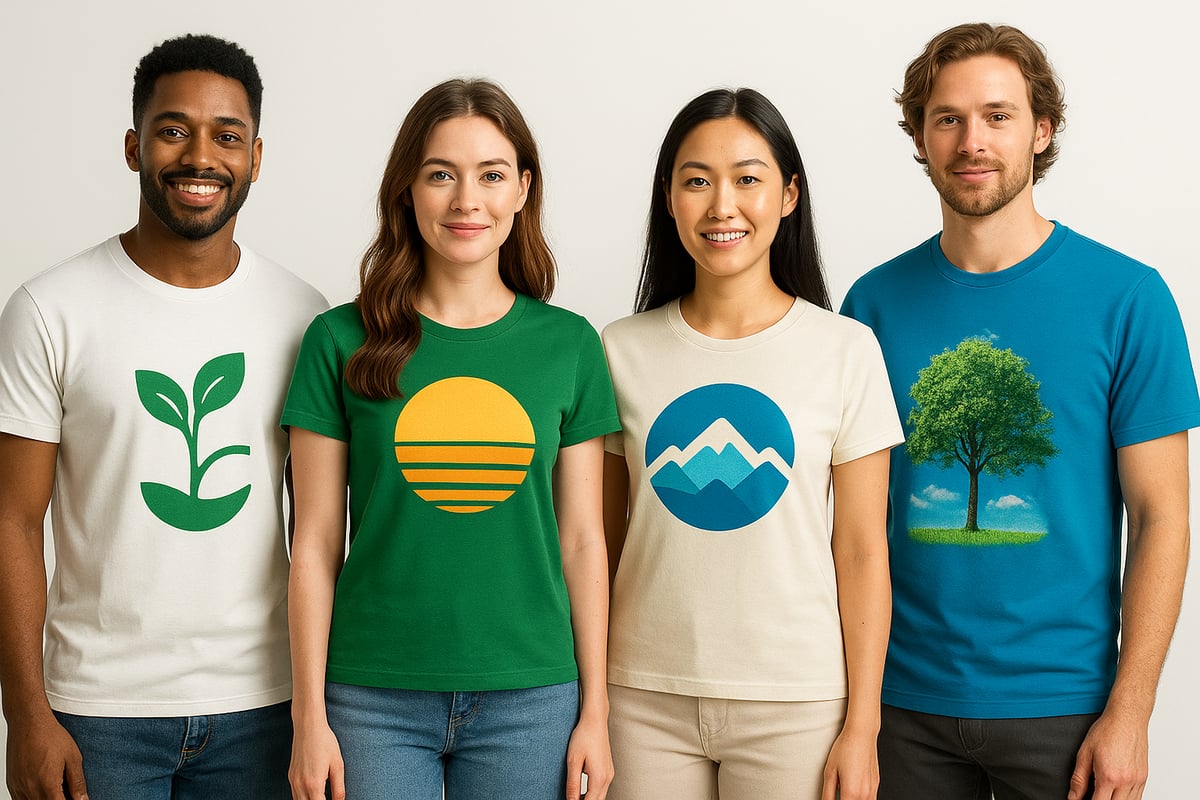
T shirt digital design in 2025 is defined by a fusion of creativity, technology, and social influence. Minimalist aesthetics remain popular, with clean lines and subtle colour palettes appealing to those who prefer understated elegance. Retro styles, inspired by the 80s and 90s, are making a strong comeback, featuring neon colours and nostalgic motifs.
Bold graphics and photo-realistic prints are pushing the boundaries of what is possible in t shirt digital printing. High-definition images and detailed illustrations are now achievable thanks to advances in print technology. Popular themes include sustainability, pop culture references, and personal branding, each reflecting broader societal trends.
AI-generated art and dynamic, interactive designs are emerging as significant trends. Designers are leveraging artificial intelligence to produce unique patterns and graphics that were previously unimaginable. For a deeper dive into how these trends are shaping the market, see Personalised T-Shirt Design Trends.
Here’s a quick comparison of trending styles:
Style | Key Features | Popular Themes |
|---|---|---|
Minimalism | Clean lines, neutral tones | Eco-conscious, modern |
Retro | Bright colours, vintage art | Nostalgia, pop culture |
Bold Graphics | Large prints, vibrant hues | Activism, statement |
Photo-realistic | High-res images, detail | Personal, bespoke |
T shirt digital design is more versatile than ever, driven by technology and cultural shifts.
Personalisation is at the heart of t shirt digital innovation in 2025. Whether for corporate events, charity runs, or memorable gifts, customised T-shirts are in high demand. Online design tools have made it easy for anyone to create a unique garment, choosing from templates or uploading their own artwork.
Businesses use t shirt digital solutions to reinforce brand identity, while individuals celebrate personal milestones or express creativity. For example, a local sports team can design shirts featuring player names and numbers, while a small business might launch a campaign with custom graphics and slogans.
Case studies from the past year highlight the effectiveness of personalised campaigns. One charity event saw a 30 per cent increase in fundraising when participants wore custom-designed shirts featuring dynamic, AI-generated visuals. Another company reported increased team spirit after providing staff with personalised T-shirts that reflected their roles and achievements.
The t shirt digital approach empowers consumers to be designers, ensuring every product tells a story. As online platforms evolve, expect even more intuitive design experiences and innovative personalisation options.
The technical side of t shirt digital design has evolved rapidly. Advances in full-colour printing and precise colour-matching technology mean that even the most intricate designs are rendered accurately. Organic cotton, recycled blends, and performance fabrics have become widely available, aligning with the growing demand for sustainable fashion.
Creative print placements are another hallmark of 2025. All-over prints, sleeve accents, and hem designs are no longer niche but mainstream choices. This flexibility enables more expressive, visually engaging T-shirts.
Recent statistics show that over 60 per cent of t-shirt digital customers now opt for sustainable materials, reflecting a broader shift towards eco-friendly practices. The table below summarises popular fabric options and their benefits:
Fabric Type | Print Compatibility | Sustainability | Best For |
|---|---|---|---|
Organic Cotton | DTG, DTF | High | Everyday wear, eco fans |
Recycled Blends | DTG, Sublimation | Very High | Sport, casual |
Performance | Sublimation | Moderate | Athletics, outdoors |
These innovations ensure that t-shirt digital printing delivers both quality and conscience, supporting creative freedom and environmental responsibility.
Selecting the ideal garment is a crucial first step in the t-shirt digital process. The fabric type, fit, and overall quality will directly impact not only the final print result but also the comfort and longevity of your custom T-shirt.
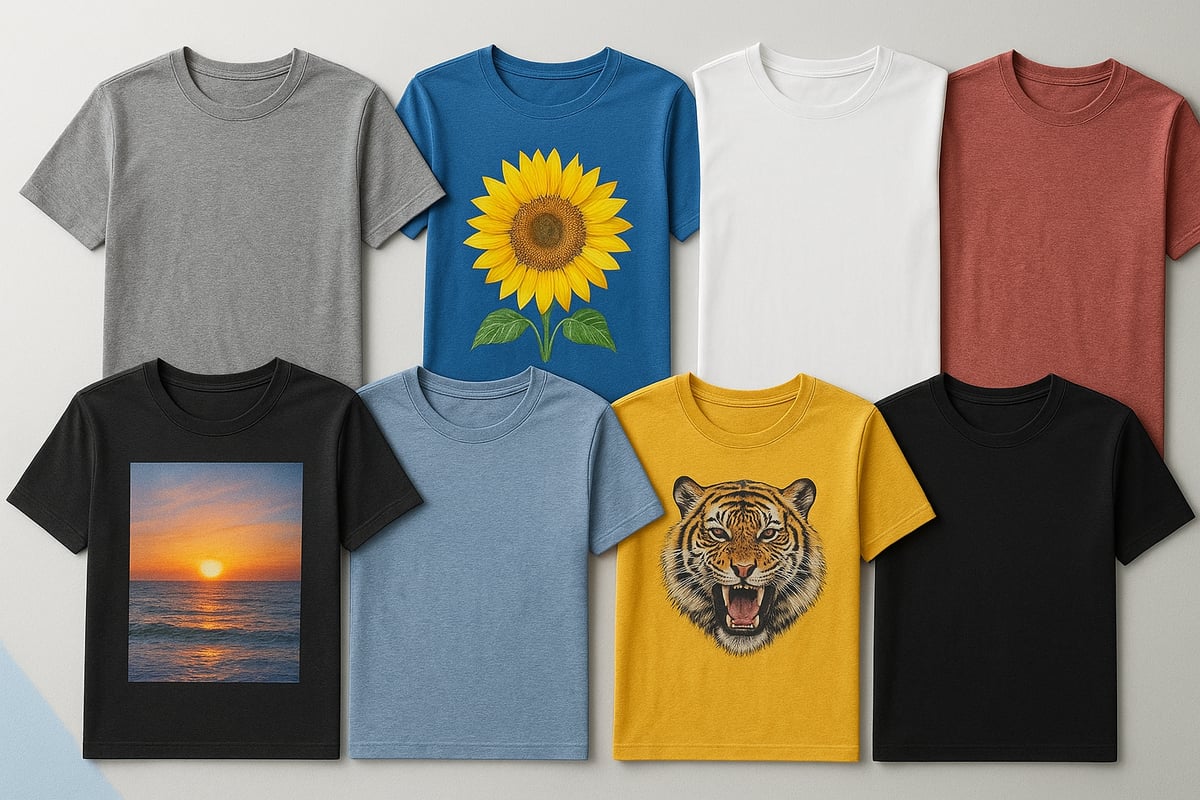
The success of any t-shirt digital project starts with the right fabric. Not all materials behave the same way with digital print methods such as DTG, DTF, or sublimation. Here’s a quick comparison:
Fabric Type | DTG Compatibility | DTF Compatibility | Sublimation Compatibility | Pros | Cons |
|---|---|---|---|---|---|
100% Cotton | Excellent | Good | Poor | Soft, vibrant colours | Shrinkage risk |
Polyester | Fair | Excellent | Excellent | Durable, vivid prints | Less breathable |
Cotton-Poly Blend | Good | Good | Fair | Balance of comfort/durability | Slightly muted colours |
Speciality (e.g. organic, bamboo) | Varies | Good | Varies | Eco-friendly options | Cost, print outcome varies |
For photo-realistic t-shirt digital prints, 100% cotton is often preferred with DTG for its ability to showcase detail and colour. Polyester is the top choice for sublimation, offering crisp, long-lasting designs. Blends can be a versatile option for everyday wear or simple logos.
When planning your t shirt digital order, consult your printer’s compatibility guidelines for best results.
Your audience’s preferences and the T-shirt’s purpose should inform your choices. Today’s t shirt digital market features:
Classic fits for universal appeal.
Slim fits for a modern silhouette.
Oversized fits for streetwear and trend-led looks.
Unisex cuts for inclusive sizing.
Gender-specific styles for tailored comfort.
Accurate sizing is essential. Most suppliers offer detailed sizing charts. Always measure garments you already own for reference and check if the t shirt digital provider offers advice on fit. This helps avoid costly returns and ensures every recipient enjoys their custom T-shirt.
The durability of a t shirt digital print depends on both the garment and the printing method. High-quality fabrics and advanced print technologies deliver longer-lasting and more vibrant results.
To maximise print life:
Choose pre-shrunk or high-thread-count fabrics.
Follow washing instructions, such as washing inside out and at low temperatures.
Avoid harsh detergents and tumble drying.
Recent customer reviews from 2024 and 2025 highlight the improved wash resistance of DTG prints on modern garments. For more insights into real-world durability and satisfaction, see Customer Satisfaction with DTG Printing.
Selecting the right T-shirt and understanding these factors ensures your T-shirt digital project will look fresh and professional, wash after wash.
Thinking about creating your own t shirt digital masterpiece in 2025? The process is now more streamlined, intuitive, and accessible than ever. Whether you are ordering a single shirt for a special event or managing a bulk order for your business, each step has been optimised for efficiency and quality. The market’s rapid adoption of digital printing technology—reflected in the Custom T-Shirt Printing Market Growth—means the experience is both seamless and robust.
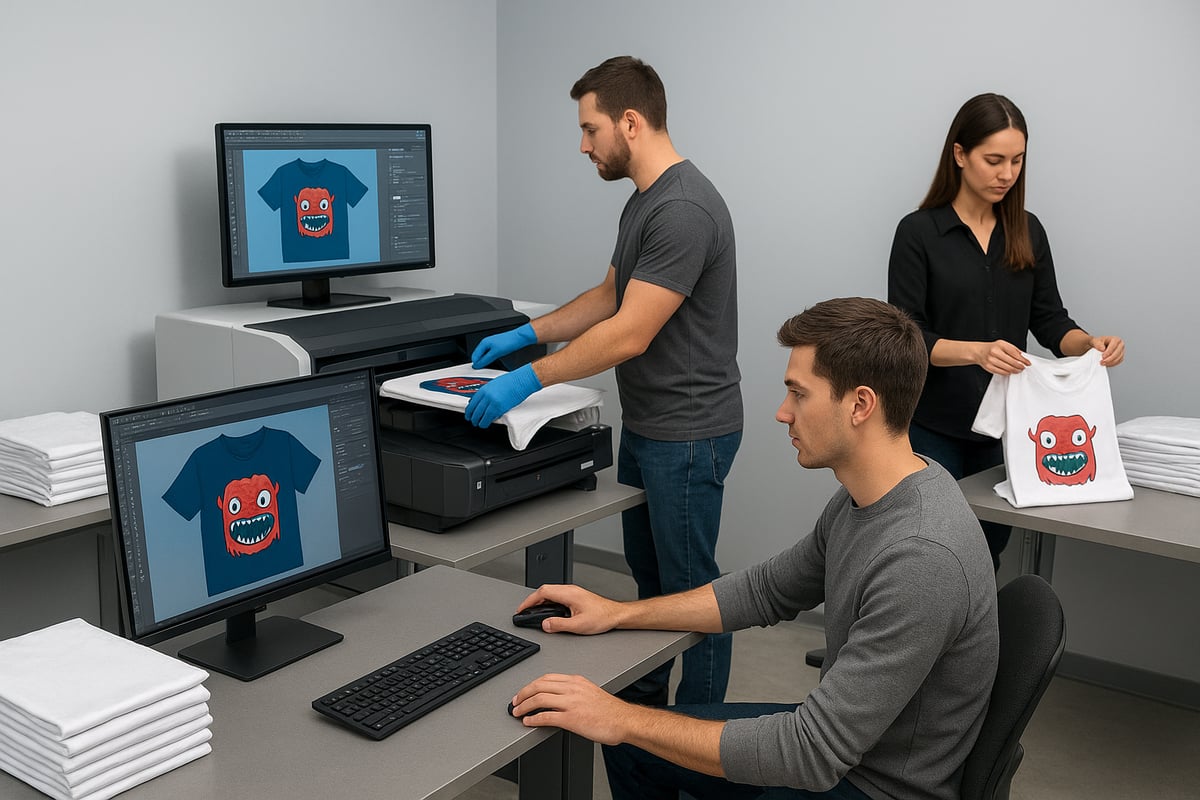
The design phase is where your t shirt digital journey begins. Leading platforms in 2025 provide user-friendly interfaces that allow both novices and professionals to create designs from scratch or use customisable templates.
When preparing your artwork, follow these file requirements:
Requirement | Details |
|---|---|
File Format | PNG, TIFF, or high-res JPEG |
Resolution | Minimum 300 DPI for sharp results |
Colour Profile | RGB or sRGB for accurate colour |
Transparency | Use PNG for transparent backgrounds |
Many design tools now feature real-time previews, AI-powered suggestions, and colour matching. This ensures your t shirt digital design will appear exactly as intended on the final product.
Before uploading, double-check the placement and scaling. For best results, use vector graphics for logos or text, and high-resolution images for photos.
Once your design is ready, it is time to place your t shirt digital order. Online ordering systems cater to both individuals and bulk buyers, offering step-by-step guidance.
Here’s how the process typically works:
Select garment type, size, and colour.
Upload your finished design file.
Choose print method (DTG, DTF, or sublimation).
Specify quantity and delivery preferences.
Review a digital proof for final approval.
Most platforms allow you to save your order, make edits, and track status. For larger orders, you may receive bulk discounts and dedicated support. Always verify your proof carefully to ensure your t shirt digital design prints correctly.
With the surge in digital printing, order fulfilment times have decreased, and customer support is now more responsive. Next, your order moves to production.
Behind the scenes, your t shirt digital design is brought to life using advanced printing technology. The process usually involves:
Pre-treating the garment (if required for DTG).
Printing the design with high-precision equipment.
Curing the ink using heat for durability.
Inspecting for print quality and colour accuracy.
Quality control teams inspect every batch for alignment, vibrancy, and defects. In 2025, most orders are completed within 24–72 hours, thanks to automation and improved drying processes.
Consider this typical timeline for a standard t shirt digital print job:
Step | Estimated Duration |
|---|---|
Design Approval | 1–2 hours |
Printing & Curing | 2–6 hours |
Quality Inspection | 30 minutes |
Packaging & Dispatch | 1 hour |
These improvements ensure you receive a product that meets both your expectations and industry standards.
After production, your t shirt digital order is carefully packaged for delivery. Eco-friendly packaging is now standard, protecting the garment and reducing waste. Delivery options include next-day, tracked, and international services.
Upon receiving your shirt, follow these aftercare tips to keep your t shirt digital print looking vibrant:
Wash inside out on a gentle cycle.
Avoid high heat when drying.
Do not iron directly on the print.
Proper care extends the life of both the fabric and the print. If issues arise, many providers offer hassle-free returns or reprints, supporting a positive customer experience.
Sustainability has become a defining factor in t shirt digital production for 2025, shaping choices from materials to manufacturing processes. With growing awareness of environmental and ethical issues, both consumers and businesses are seeking solutions that minimise impact while maintaining quality. This section explores how eco-friendly innovations, waste reduction strategies, and moral standards are transforming the t shirt digital landscape.
The shift towards sustainable t shirt digital printing is driven by a surge in demand for organic, recycled, and fairtrade garments. In 2025, brands are prioritising organic cotton, recycled polyester, and innovative blends that reduce reliance on virgin resources. Water-based and non-toxic inks are now standard, providing vibrant colours without hazardous by-products.
Leading companies are setting the bar for sustainable t shirt digital practices. For instance, many UK print providers now offer collections that are GOTS-certified, ensuring garments are produced to rigorous organic and ethical standards. Adoption of recycled blends and biodegradable packaging is also on the rise.
According to Sustainable Custom T-Shirt Printing, advancements in digital printing technology have enabled the use of eco-friendly inks and materials without sacrificing print quality. This means customers can choose t shirt digital options that align with their environmental values and still enjoy crisp, long-lasting designs.
Print-on-demand is revolutionising the t shirt digital industry by producing garments only when ordered, dramatically cutting down on overproduction and landfill waste. This model is especially effective for small runs, events, and personalised orders, ensuring resources are used efficiently.
Digital printing equipment is now more energy-efficient, with modern machines optimising ink consumption and reducing water use compared to traditional methods. Recent data suggests that t-shirt digital printing can reduce fabric waste by up to 40 per cent compared to screen printing, making it a preferred choice for environmentally conscious buyers.
A growing number of businesses are investing in renewable energy for their production facilities. By combining sustainable power sources with streamlined logistics, the t shirt digital supply chain is reducing its overall carbon footprint. This evolution supports a greener future for the fashion and promotional industries.
Ethical considerations are integral to t shirt digital production, with transparency in sourcing and manufacturing under increasing scrutiny. Brands are adopting certifications that guarantee fair labour, safe working conditions, and responsible environmental management.
Standard certifications in 2025 include:
Certification | Focus Area | Description |
|---|---|---|
GOTS | Organic, Social, Env. | Global Organic Textile Standard |
Fair Wear | Labour Rights | Ensures fair wages and safe conditions |
OEKO-TEX | Chemical Safety | Tests for harmful substances in textiles |
Consumers are demanding greater accountability, favouring t shirt digital brands that publish supply chain details and adhere to these benchmarks. Ethical production is no longer optional, but a key differentiator in the competitive custom T-shirt market.
Understanding what drives the cost of t shirt digital printing is crucial for anyone looking to create custom garments in 2025. Whether you are an individual ordering a single shirt or a business planning a large batch, several variables impact the final price. Let’s break down these factors and explore how to get the most value for your investment.
The price of a t shirt digital print is shaped by a combination of material, print method, order volume, and delivery preferences. Each of these elements plays a distinct role in determining the total cost.
Factor | Impact on Cost | Example Comparison |
|---|---|---|
Material Choice | Organic cotton and performance fabrics cost more | Standard vs. recycled blend |
Print Complexity | Full-colour, photo-quality prints are pricier | Logo vs. all-over artwork |
Order Volume | Bulk orders often qualify for discounts | 1 shirt vs. 100 shirts |
Delivery Speed | Express shipping increases total price | Standard vs. next-day |
For example, a single t shirt digital order using premium organic cotton and a full-colour design will cost more per unit than a bulk order of simple logo tees on standard cotton. Direct-to-garment (DTG) and direct-to-film (DTF) methods are typically more cost-effective for short runs, while traditional screen printing may be competitive for huge orders.
According to the Digital Textile Printing Market Outlook, the market for t shirt digital production continues to grow, with more businesses and consumers demanding flexibility, speed, and sustainable materials. This shift is making digital methods more accessible and affordable year on year.
Achieving the right balance between quality and cost is a common challenge in t shirt digital orders. Here are some practical tips to ensure you get the best value:
Choose the proper print method for your design. DTG excels with detailed, colourful artwork, while DTF is ideal for versatility across fabric types.
Select garments that complement your print. Higher-quality shirts may cost more upfront but often yield longer-lasting, more vibrant prints.
Prepare high-resolution artwork to avoid costly reprints or dissatisfaction.
For events or promotions, consider simpler designs on mid-range fabrics to maximise value without compromising impact.
A recent case study highlights a charity that saved significantly by opting for a t shirt digital approach for their event, choosing a balance of mid-tier cotton shirts and single-colour prints. This strategy delivered professional results within a tight budget, proving that careful planning pays off.
Looking ahead, the cost of t shirt digital printing is expected to decrease as technology evolves. Improved printer efficiency, cheaper, eco-friendly inks, and streamlined online ordering are all contributing to lower prices for both single orders and large batches.
Predictions for 2026 suggest that personalised T-shirt pricing will become even more competitive, especially as demand for customisation grows across all age groups and industries. The rise of digital printing is levelling the playing field, allowing small businesses and individuals to access high-quality products once reserved for large corporations.
Ultimately, t shirt digital printing in 2025 offers outstanding value for money, combining creativity, speed, and sustainability in ways that were unimaginable a decade ago.

OK T-Shirt
126 Beeches Rd
Birmingham
B42 2HQ
