Cheap Printed T-Shirts UK: Quality & Value Guide 2026
Discover how to source cheap printed t-shirts UK without compromising…
T shirt stamping is rapidly changing the face of custom apparel in 2025, offering both enthusiasts and businesses a fresh way to create standout designs.
This essential guide will walk you through the process, highlight the latest trends, and share practical tips for successful projects.
With the demand for personalised clothing on the rise and technology evolving, now is the perfect time to explore this creative opportunity. Get ready to learn how to make your t shirt stamping projects both stylish and effective.
T shirt stamping is a custom apparel technique that uses specialised stamps and inks to transfer designs onto fabric. Unlike screen printing, direct-to-garment (DTG), or heat transfer, t shirt stamping offers a hands-on approach with a unique tactile finish. If you are curious about how stamping compares to modern printing methods, the Guide to T Shirt Printing Technology provides a clear overview, helping you choose the right process for your needs.
The evolution of t shirt stamping over the past decade has been remarkable. In the early 2010s, most stamping was manual, requiring simple rubber or wooden stamps. By 2025, advancements have introduced photopolymer and 3D-printed stamps, making intricate designs more accessible. Digital tools now aid in stamp creation, allowing for greater precision and repeatability.
Modern t shirt stamping relies on several core materials. Inks have become more sophisticated, with water-based and eco-friendly options dominating the market in 2025. Stamps can be crafted from rubber, photopolymer, or even custom 3D prints, each offering different levels of detail and durability. Fabrics suitable for stamping include cotton, polyester blends, and sustainable fibres, giving creators flexibility in garment selection.
What makes t shirt stamping stand out? Its main advantages are durability and design flexibility. Stamped designs can last through many washes if cured correctly. The method enables quick changes between artwork, making it ideal for limited-edition runs or personalised pieces. Eco-friendliness is another key benefit, as many practitioners now use biodegradable inks and recyclable stamp materials. For small businesses and hobbyists, stamping remains cost-effective compared to large-scale printing.
However, t shirt stamping does have limitations. Colour layering can be challenging, restricting the number of hues in a single design. Highly detailed or photorealistic images may not translate well to stamps. Scaling up production for large orders also requires careful workflow planning, as manual stamping takes more time than automated processes.
Industry data highlights the growing demand for custom apparel. According to Statista and IBISWorld, the global custom t-shirt market has seen steady year-on-year growth, fuelled by advances in personalisation and small business entrepreneurship. In 2024 and 2025, the UK market in particular has shown increased interest in sustainable and unique t shirt stamping methods.
Many brands and small businesses are embracing t shirt stamping to set themselves apart. Independent designers use hand-stamped motifs for exclusivity, while larger brands incorporate stamping in capsule collections for a personalised touch. This approach resonates with customers seeking originality and eco-conscious fashion.
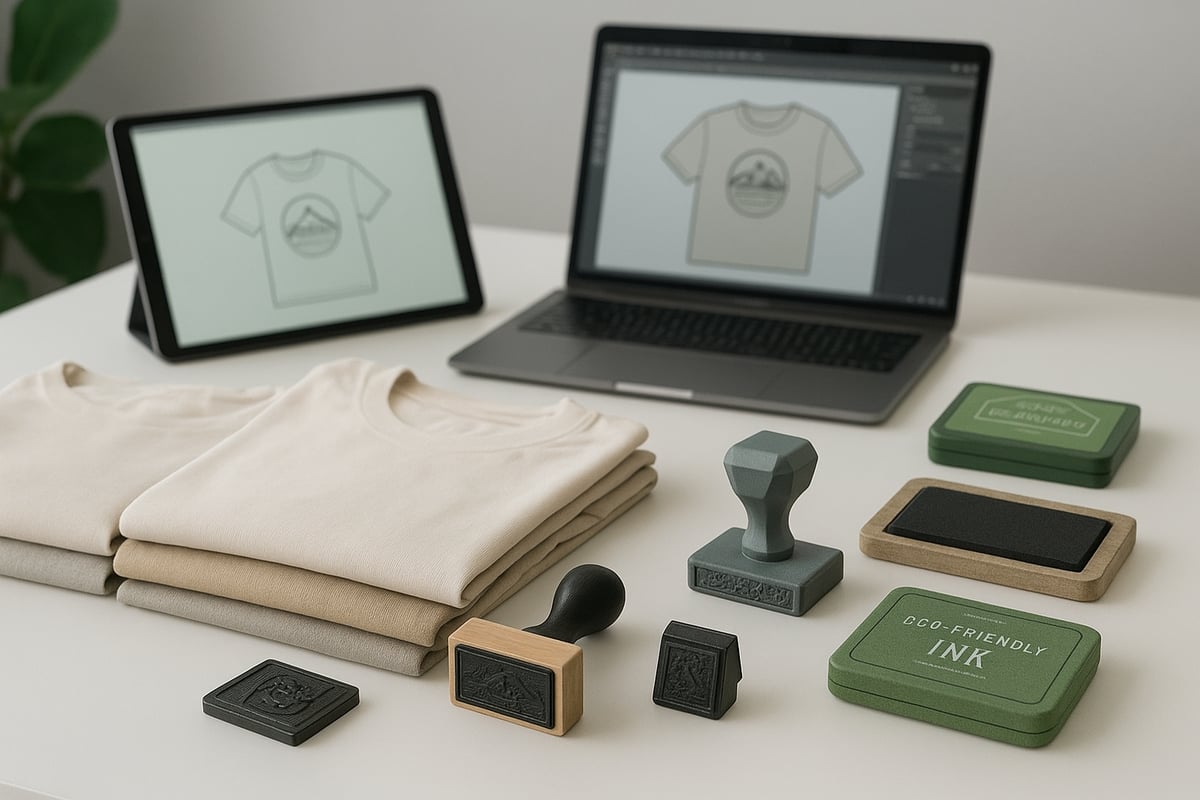
Embarking on a t shirt stamping project in 2025 is both accessible and rewarding. With advances in materials and techniques, achieving professional results at home or in a studio has never been easier. This step-by-step guide will walk you through every stage, from preparing your workspace to finishing your custom apparel with confidence.
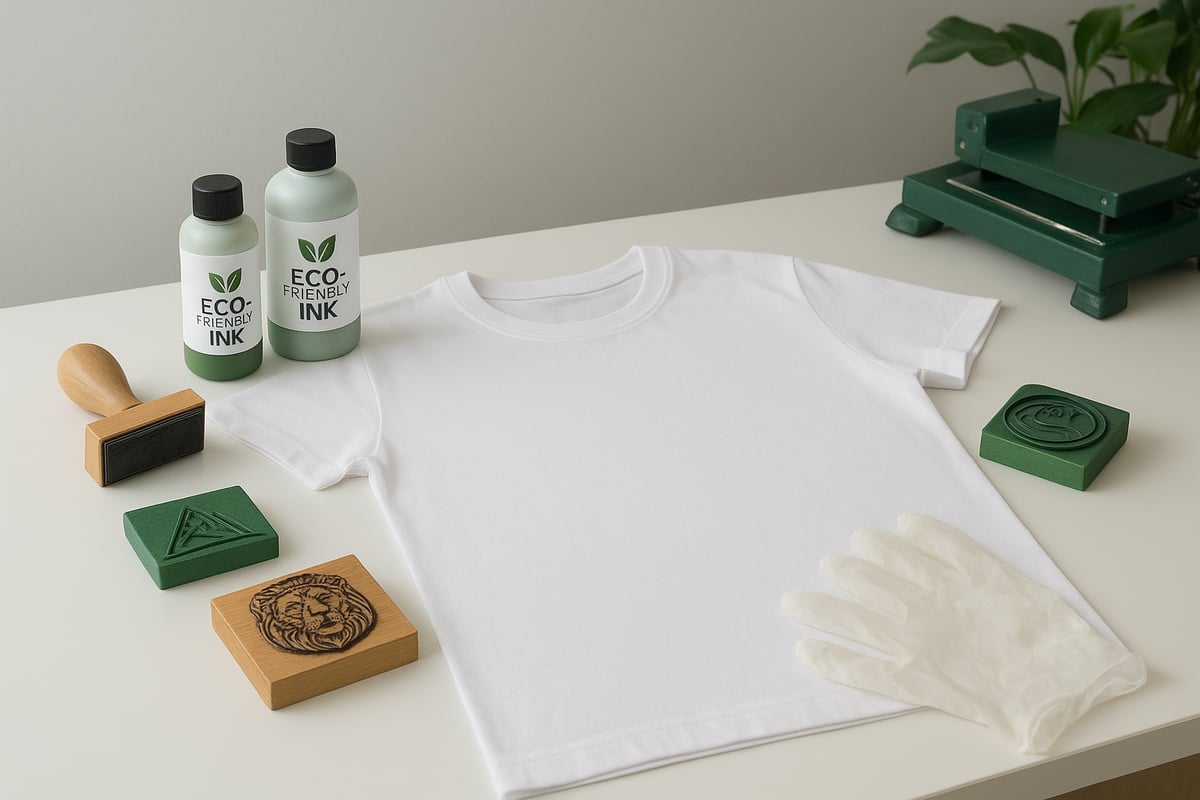
Creating a successful t shirt stamping environment starts with organisation. Select a clean, flat surface with ample lighting to ensure visibility and prevent ink spills. Use a protective sheet or craft mat to shield your workspace from stains.
Choose your t shirt fabric wisely. Cotton remains a top choice for t shirt stamping due to its absorbency and smooth texture, but blends and certain synthetics designed for stamping in 2025 also yield excellent results. Check fabric labels for compatibility with stamping inks.
Gather essential tools:
Pre-wash and iron your garments before starting. This removes sizing agents and ensures the fabric is smooth, which is crucial for crisp t shirt stamping results.
Strong artwork is the backbone of memorable t shirt stamping. Begin by sketching your ideas, keeping in mind the limitations and strengths of stamping. Bold lines and clear shapes translate best, while intricate gradients are more suited to digital methods.
In 2025, digital design tools like Procreate, Adobe Illustrator, and specialised t shirt design apps are widely used. These platforms enable precise scaling, mirroring, and positioning of your artwork to fit the stamp area.
When preparing your design:
Test your artwork on paper before committing it to fabric. Adjust the size or placement if necessary, keeping the t shirt stamping process in mind to avoid design misalignment.
Selecting the right stamp type is crucial for t shirt stamping. In 2025, options include traditional rubber, photopolymer for fine detail, and 3D-printed stamps for custom shapes.
To create a custom stamp at home:
DIY stamps are cost-effective for short runs and experimentation. However, professional services offer superior precision, longevity, and ease of cleaning, which is vital for repeated t shirt stamping projects.
Pre-made stamps provide convenience but may limit design flexibility. Evaluate your needs before choosing between DIY and professional options.
Selecting the right ink is vital for t shirt stamping. Water-based inks are popular for their eco-friendliness and soft feel, while plastisol inks offer durability. Always verify ink compatibility with your chosen fabric.
For consistent coverage:
To avoid smudges or misalignment, lift the stamp vertically after pressing. If issues arise, reference guides like Screen Printing vs. DTG Explained to understand how stamping compares and troubleshoot common problems.
Practice on test fabric to build confidence before stamping your final piece. Quality control at this stage ensures your t shirt stamping project meets your expectations.
Proper curing guarantees that your t shirt stamping design lasts wash after wash. Air-drying is suitable for most water-based inks, but heat-setting is recommended for increased durability.
Methods include:
Consult ink manufacturer guidelines for recommended curing times, which typically range from 2 to 5 minutes at 160–180°C. Allow the design to cool completely before handling.
Test wash a sample garment to confirm the ink’s adherence and longevity. This step is essential to maintain the integrity of your t shirt stamping work.
After curing, inspect your t shirt stamping for any errors or incomplete prints. Address minor imperfections with a fine brush and matching ink.
For best results:
Before wearing or selling, wash the garment according to fabric and ink care instructions. Proper finishing enhances the professionalism and appeal of your t shirt stamping project.
Selecting the right materials and tools is crucial for high-quality t shirt stamping results. The choices you make affect the look, feel, durability, and even the sustainability of your custom apparel.
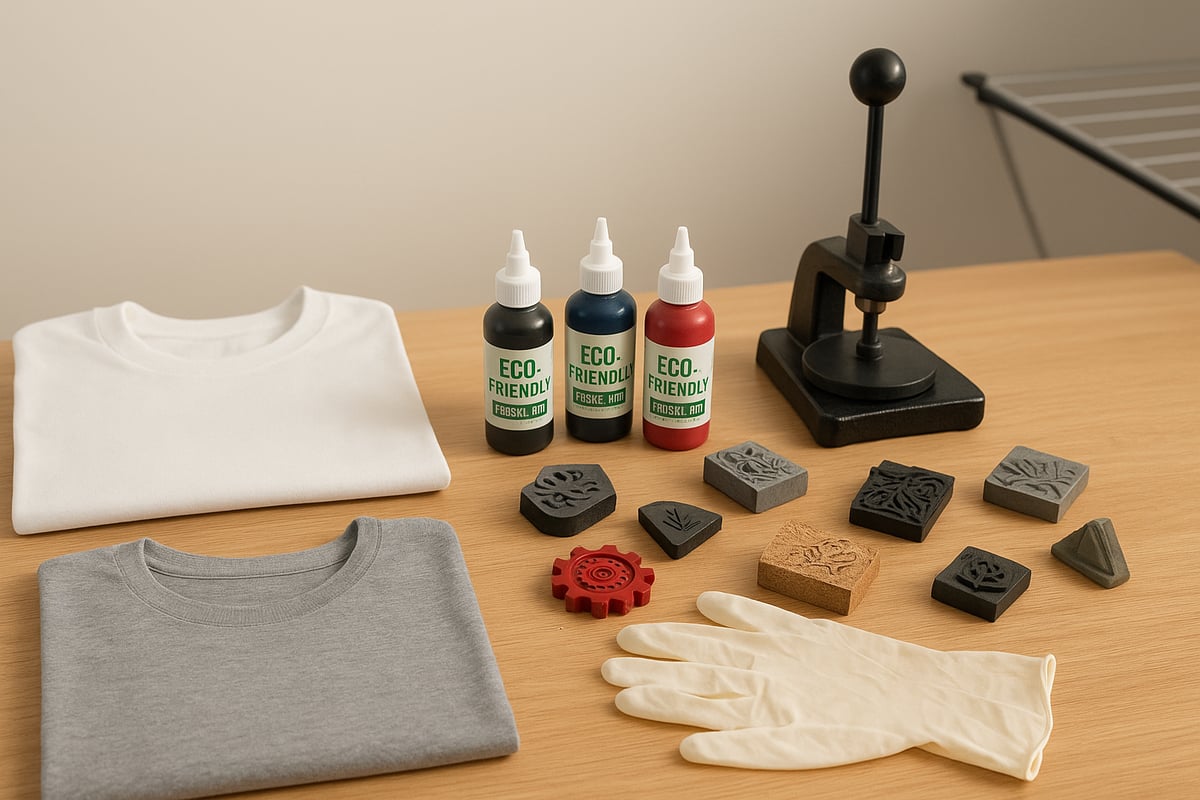
When it comes to t shirt stamping, fabric selection is the foundation of your project. Cotton remains the top choice due to its smooth surface and ink absorption, resulting in crisp, long-lasting prints. Organic cotton is particularly popular for sustainable projects.
Blended fabrics, such as cotton-polyester mixes, offer a balance of softness and durability. They are less prone to wrinkling and shrinkage, making them suitable for everyday wear. However, synthetics like polyester can be more challenging for t shirt stamping because certain inks may not bond as effectively, impacting wash resistance.
For those prioritising sustainability, recycled and bamboo fabrics are gaining traction. These materials align with eco-conscious values and often pair well with modern stamping inks. For more on sustainable choices, see Sustainable Custom T Shirt Printing.
The right ink makes all the difference in t shirt stamping. Water-based inks are favoured for their soft feel and minimal environmental impact. They work exceptionally well on cotton and light-coloured blends, providing vibrant, breathable prints.
Plastisol inks are known for their durability and opacity, making them a reliable option for bold designs or darker fabrics. However, they may require heat curing and can feel thicker on the garment. Discharge inks chemically remove dye from dark fabrics, creating soft prints with a vintage effect, but they work best on 100 percent cotton.
When choosing ink, consider both the fabric and your design goals. Always test the ink on a sample swatch before full production to ensure compatibility and desired results with t shirt stamping.
The stamp itself is the heart of t shirt stamping. Traditional rubber stamps are cost-effective and easy to use, offering flexibility for simple designs. Photopolymer stamps provide higher detail and are ideal for intricate patterns, although they require careful handling.
For custom or complex artwork, 3D-printed stamps are leading the way in 2025. They offer precise, repeatable results and are highly durable. When choosing a stamp, consider ease of cleaning and longevity, especially for repeated use in business settings.
DIY stamps can be made at home using lino cutting or silicone moulds, while professional services offer bespoke options with advanced materials. Match the stamp type to your design complexity and production scale for the best t shirt stamping outcome.
To achieve professional results in t shirt stamping, supporting tools are essential. A small manual or automatic press helps apply even pressure, reducing the risk of smudges or incomplete prints. Drying racks allow for efficient air circulation, speeding up the curing process.
Protective sheets, such as Teflon or silicone mats, prevent ink bleed-through and protect work surfaces. Safety gear like gloves and aprons keeps you safe from accidental spills or stains.
Organising your workspace with these tools streamlines the process, making t shirt stamping more enjoyable and efficient whether for personal or business projects.
For hobbyists, affordability is key, but compromising on quality can affect the final product. Entry-level kits provide basic tools for t shirt stamping, but investing in higher-grade inks and stamps yields better results.
Professionals should prioritise durability and scalability. Reusable stamps and bulk inks may cost more upfront but lower costs over time. Always weigh the long-term benefits against initial expenses, especially if you plan to scale your t shirt stamping business.
Finding reliable suppliers is crucial for consistent t shirt stamping quality. In the UK, specialist craft stores and online retailers offer a wide range of fabrics, inks, and stamps. For global sourcing, look for suppliers with clear sustainability credentials and positive reviews.
Below is a comparison table of popular materials and their performance in t shirt stamping:
| Material/Tool | Durability | Print Quality | Eco-friendliness | Ease of Use |
|---|---|---|---|---|
| 100% Cotton | High | Excellent | High | Easy |
| Cotton-Poly Blend | Medium | Good | Medium | Easy |
| Polyester | Medium | Fair | Medium | Moderate |
| Water-based Ink | Medium | Excellent | High | Easy |
| Plastisol Ink | High | Good | Low | Moderate |
| Rubber Stamp | Medium | Good | Medium | Easy |
| 3D-printed Stamp | High | Excellent | Medium | Moderate |
Researching and testing different materials will help you discover the ideal combination for your specific t shirt stamping needs.
Keeping pace with creative design is essential for anyone involved in t shirt stamping. The landscape in 2025 is dynamic, shaped by evolving consumer tastes and technological innovation. From bold statements to subtle personal touches, new trends are emerging that define the look and feel of custom apparel.

Popular Themes in 2025
Retro designs are enjoying a strong resurgence in t shirt stamping, with bold fonts and nostalgic graphics inspired by the late 20th century. Minimalism is also at the forefront, as clean lines and simple shapes appeal to consumers seeking understated elegance. Eco-conscious messaging is more prevalent than ever, with environmental slogans and nature-inspired motifs stamped onto organic fabrics. These themes not only reflect current values but also allow brands to connect authentically with their audiences through t shirt stamping.
Personalisation and Mixed Media
Personalisation remains a driving force in t shirt stamping. Names, initials, logos, and unique artwork allow individuals and businesses to showcase their identity. In 2025, there is a growing trend of combining stamping techniques with embroidery or digital prints, resulting in visually striking, textured garments. This mixed media approach offers greater creative freedom and ensures each piece stands out. Integrating multiple methods into a single design pushes the boundaries of what t shirt stamping can achieve.
Influencer Collaborations and Viral Trends
Influencers and celebrities are shaping the t shirt stamping landscape by collaborating on limited edition releases. These partnerships often lead to viral social media campaigns, rapidly setting new style benchmarks. Trending colour palettes, such as Pantone’s Colour of the Year and bold, contrasting hues, feature prominently in popular designs. For a deeper dive into the latest movements, see Custom Apparel Trends for 2025, which highlights how innovation and sustainability are guiding the future of custom apparel and t shirt stamping.
Case Example: Viral Campaigns and Social Media
One notable example is the rise of independent brands leveraging t shirt stamping for limited drops that go viral. By tapping into trending hashtags and partnering with micro-influencers, small businesses have achieved massive reach and engagement. These campaigns often use distinctive colour combinations and eco-friendly materials, capturing the attention of socially conscious consumers. Social media platforms continue to play a pivotal role in amplifying the impact of t shirt stamping trends.
Tips for Standing Out
To succeed in the crowded t shirt stamping market, focus on originality and relevance. Use emerging colour palettes, experiment with fabric textures, and stay informed about design reports. Consider creating themed collections or offering exclusive personalisation services to attract niche audiences. Consistent quality and authentic storytelling will help your t shirt stamping projects resonate strongly in 2025.
The t shirt stamping industry has become a vibrant arena for entrepreneurs and established brands alike. Businesses are discovering that t shirt stamping offers a unique blend of creativity, flexibility, and profitability. With custom clothing in high demand, the market is primed for those ready to turn their passion into profit.
The demand for t shirt stamping has surged, fuelled by events, corporate branding, local clubs, and even school initiatives. Personalisation is now a key selling point, enabling businesses to cater to niche markets and unique customer preferences.
Recent data shows the custom t shirt printing market is set for significant expansion. According to Custom T-Shirt Printing Market Growth, the industry is projected to grow by over USD 2 billion between 2024 and 2028. This growth is driven by brands using t shirt stamping as a powerful branding tool and the adoption of AI in design and production.
| Opportunities | Challenges |
|---|---|
| Rapid market growth | Scaling production |
| Diverse customer base | Maintaining consistent quality |
| Creative freedom | Meeting tight deadlines |
| Eco-friendly branding | Navigating legal complexities |
While t shirt stamping presents abundant opportunity, scaling production can be demanding. Ensuring uniform quality, especially with large orders, requires precise workflow and reliable materials.
Legal considerations are equally important. Businesses must respect copyright and trademark laws when producing custom designs. Always secure the appropriate licences and be mindful of intellectual property issues. Addressing these factors early helps avoid costly disputes and protects your reputation.
Setting the right price for t shirt stamping involves a careful balance between material costs, labour, and desired profit margins. Transparent pricing builds trust and encourages repeat business.
Marketing is crucial for success. Consider these channels:
Building your brand story and showcasing unique designs will help you stand out in a competitive landscape.
UK-based businesses are thriving with t shirt stamping by embracing innovation and customer engagement. Small studios have scaled up by offering bespoke designs for local events, while larger brands leverage advanced stamping technology for mass personalisation.
Industry statistics highlight this momentum. Revenue in the custom apparel sector has increased steadily, with t shirt stamping recognised as a major contributor. Success stories often feature businesses that prioritise quality, adopt sustainable practices, and adapt quickly to changing trends. By following best practices and staying informed, you can secure a strong position in this dynamic market.
The horizon for t shirt stamping is expanding rapidly as 2025 approaches and beyond. The industry is poised for transformation, driven by a blend of technological breakthroughs, shifting consumer preferences, and evolving regulations. What can businesses and enthusiasts expect in the next era of custom apparel?
Artificial intelligence is reshaping the t shirt stamping landscape. Sophisticated algorithms now power design software, enabling rapid prototyping and unique, personalised graphics at scale. Automation in stamping machinery ensures greater precision and speed, reducing manual errors while increasing output.
Smart fabrics are emerging, blending traditional textiles with embedded technology. These new materials support vibrant, long-lasting stamped designs and even interactive features. The synergy of AI and smart textiles is setting new standards for quality and creativity in t shirt stamping.
The future of t shirt stamping is closely tied to on-demand production and mass personalisation. Consumers increasingly expect to design and receive unique garments quickly, driving demand for agile, scalable workflows. E-commerce platforms are integrating advanced design tools, making it easier for anyone to customise apparel from home.
Virtual try-on technologies, powered by AR and VR, are becoming mainstream. Shoppers can now visualise stamped designs on digital avatars before purchasing, enhancing confidence and reducing returns. This seamless integration is propelling the industry forward, making t shirt stamping more accessible and appealing than ever.
Sustainability is now a central focus for the future of t shirt stamping. Eco-friendly inks and recyclable materials are in high demand, and regulatory bodies are setting stricter standards for production processes. Brands are investing in research and adopting innovative solutions to reduce their environmental footprint. For those interested in the latest eco-innovations, advancements in eco-friendly inks in textile printing are shaping the industry's sustainable future.
Market projections signal robust growth for custom apparel, fuelled by personalisation and new technologies. According to the Custom T-Shirt Printing Market Report 2025, t shirt stamping is expected to see significant expansion, with key trends including automation, digitalisation, and sustainability.
Industry leaders predict that t shirt stamping will continue to evolve at pace, driven by consumer demand for unique, ethically produced clothing. To remain competitive, businesses and creators should invest in continuous learning, join professional communities, and stay updated on technological advancements.
Resources like online forums, trade shows, and expert webinars are invaluable for keeping up with best practices and innovations. By embracing change, the next generation of t shirt stamping professionals will be well-positioned to thrive in a dynamic market.

OK T-Shirt
126 Beeches Rd
Birmingham
B42 2HQ
