Cheap Printed T-Shirts UK: Quality & Value Guide 2026
Discover how to source cheap printed t-shirts UK without compromising…
Imagine stepping out in a T-shirt that is more than just clothing—it is a statement of your creativity and individuality. In 2026, t shirts and embroidery are your canvas for personal expression, whether you are crafting for yourself, building a brand, or uniting a team.
This handbook is your essential companion, guiding you through every stage of the journey. Discover how to choose the perfect T-shirt, master embroidery techniques, explore customisation methods, find inspiration for unique designs, and care for your creations. With new fabric technologies and easy-to-use embroidery tools, making your mark has never been more accessible.
Ready to unlock your creative potential? Dive in and start turning your ideas into wearable art.
The world of t shirts and embroidery in 2026 is shaped by innovation and consumer demand for quality, sustainability, and style. Whether you are customising for yourself, a business, or a group, understanding your options is the key to a standout result. Let’s explore how fabric choices, fit, and current trends influence the perfect canvas for your next creative venture.
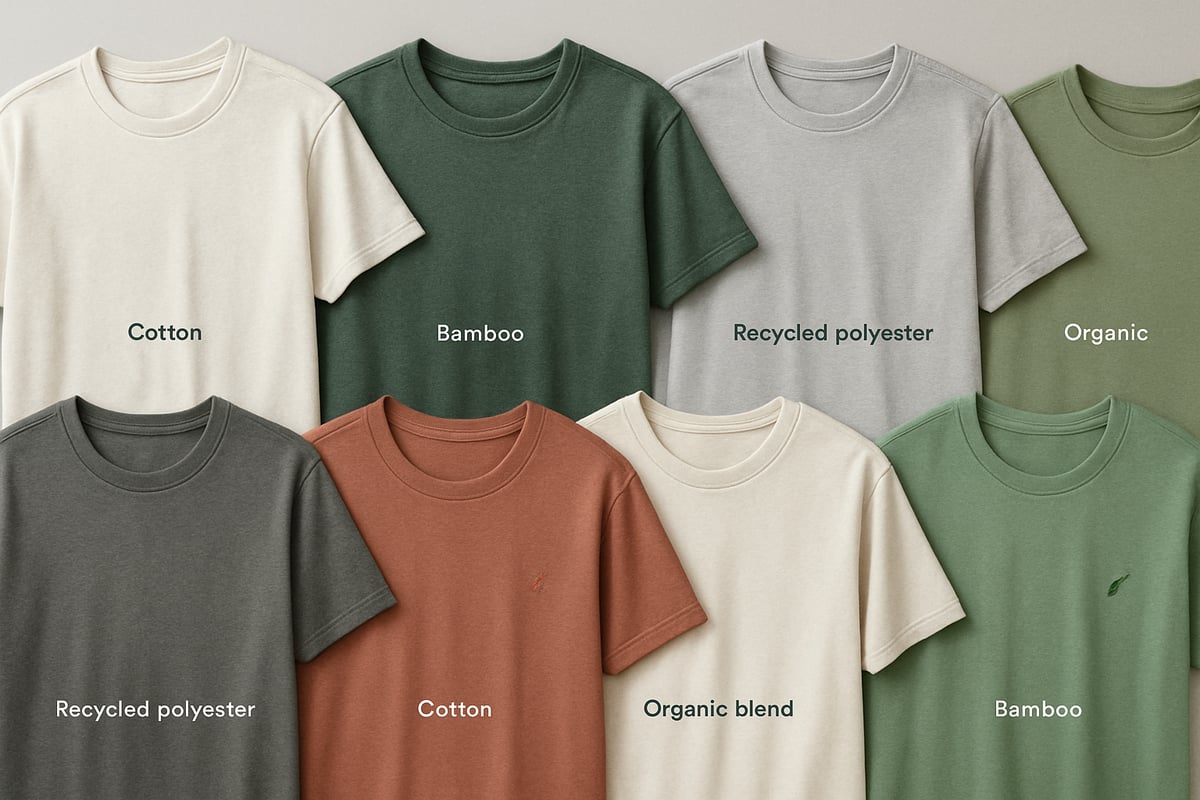
Fabric selection forms the backbone of any t shirts and embroidery project. In 2026, the most popular options include cotton, organic blends, recycled polyester, bamboo, and performance fabrics. Each offers unique benefits, making it essential to match your choice to your needs.
| Fabric Type | Comfort | Durability | Printability | Eco-Friendliness |
|---|---|---|---|---|
| Cotton | High | Moderate | Excellent | Good |
| Organic Blends | High | Good | Very Good | Excellent |
| Recycled Polyester | Moderate | High | Good | Excellent |
| Bamboo | Very High | Moderate | Good | Excellent |
| Performance | High | Very High | Moderate | Good |
Cotton is loved for its softness and print clarity, while recycled polyester boasts strength and a reduced environmental footprint. Bamboo is increasingly popular for its silky feel and sustainability, perfect for those prioritising eco-conscious t shirts and embroidery.
The fit of a T-shirt influences both comfort and the results of t shirts and embroidery. Classic fits provide a relaxed silhouette, ideal for most body types and highly versatile for customisation. Slim fits offer a tailored look, perfect for modern branding or event wear.
Oversized and cropped styles are trending for their bold fashion statements, while athletic cuts cater to active lifestyles. When planning your design, consider how the fit interacts with embroidery placement and print size—an oversized tee allows for larger graphics, while a cropped fit works well with minimalist motifs.
Sustainability sits at the heart of 2026’s t shirts and embroidery trends. Bold colours, gender-neutral fits, and tech-integrated fabrics are making waves, reflecting a shift towards both individuality and responsibility. The use of recycled and organic materials is now mainstream, meeting the preferences of eco-conscious consumers.
For a deeper dive into eco-friendly practices and the rise of ethical customisation, explore this Sustainable Custom T-Shirt Printing guide. Tech-driven features such as moisture-wicking and NFC integration are also enhancing the appeal of modern T-shirts, further expanding customisation possibilities.
Ethical production and fair trade have become critical factors in the t shirts and embroidery industry. More brands are committing to transparent supply chains, fair wages, and environmentally responsible manufacturing. According to Statista (2025), 67% of UK consumers now prefer sustainable clothing, highlighting a significant shift in buying habits.
This focus on ethics not only supports workers but also appeals to customers who want their clothing choices to reflect their values. As a result, sustainable and fair trade T-shirts are increasingly seen as the preferred base for custom embroidery and print projects.
Choosing the right T-shirt for t shirts and embroidery means looking beyond style alone. Pay attention to weave density, thread count, and surface smoothness. These factors directly affect the quality of your finished design, whether you are printing or embroidering.
For example, a standard cotton tee provides a smooth and stable base, ensuring crisp embroidery and vibrant prints. In contrast, recycled polyester, while durable and eco-friendly, may require special stabilisers to prevent puckering during embroidery. By considering both the technical and aesthetic qualities, you can achieve professional results every time.
Getting started with t shirts and embroidery means understanding the essential equipment and methods you’ll need for success. Whether you’re creating a single personalised tee or launching a custom line, mastering the basics is your first step to professional results.
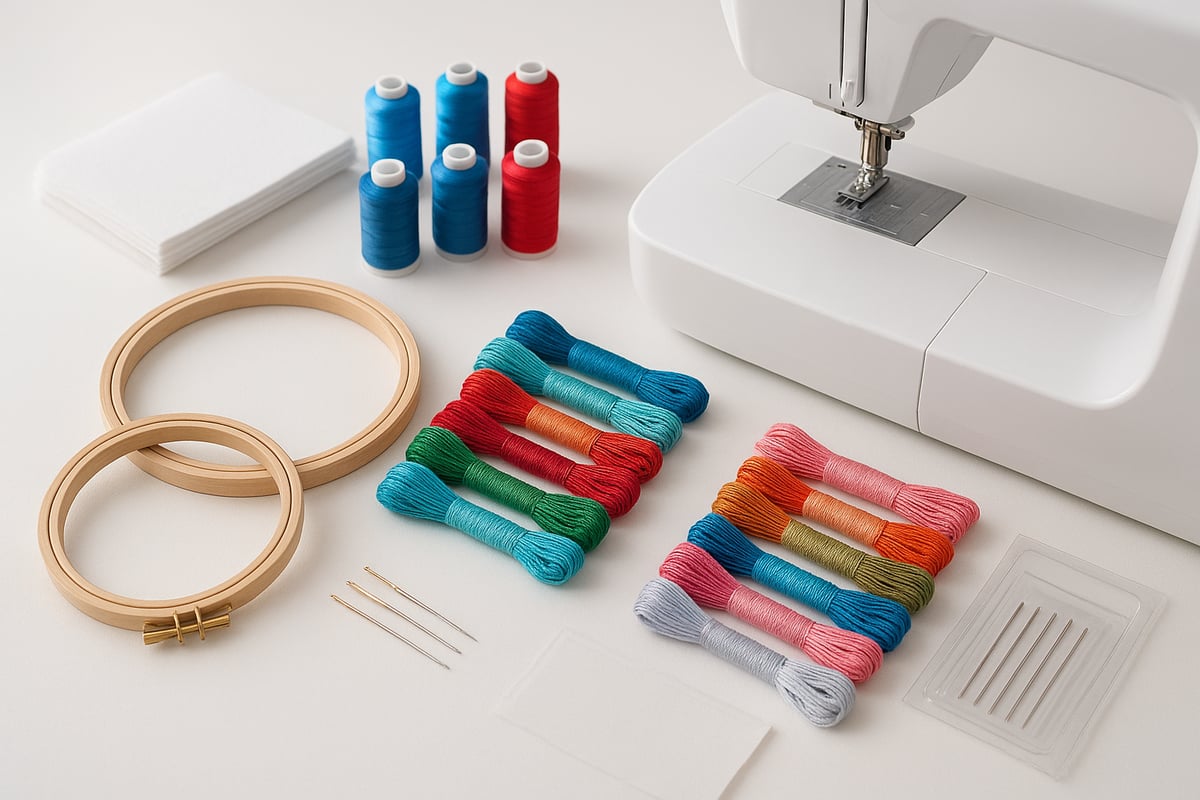
Essential Tools for T Shirts and Embroidery
To produce crisp and lasting designs, you’ll need a few key tools:
The right combination of these tools ensures your work stands out, whether you’re working by hand or with a machine.
Types of Stitches and Their Effects
Understanding stitches is fundamental for t shirts and embroidery. The most popular stitches include:
Each stitch offers a different visual effect, allowing you to create everything from bold logos to delicate motifs.
Choosing the Right Thread
Selecting the appropriate thread is crucial in t shirts and embroidery. The main options are:
Match your thread to the fabric and intended use for the best outcome.
Digitising Artwork for Embroidery
Modern t shirts and embroidery benefit greatly from advances in digitising software. In 2026, AI-assisted programmes can convert artwork into stitch-ready files with remarkable accuracy. Key steps include:
For those interested in the latest machinery and software trends, the Embroidery Equipment Market Size, Share & Report [2035] provides valuable insights into current technology.
Manual vs. Machine Embroidery
Choosing between manual and machine embroidery for t shirts and embroidery depends on your project and goals. Here’s a quick comparison:
| Feature | Manual Embroidery | Machine Embroidery |
|---|---|---|
| Detail Level | High for small areas | Extremely precise |
| Speed | Slower | Much faster |
| Customisation | Unique, handmade | Ideal for bulk work |
| Learning Curve | Easier to start | Software skills needed |
Manual embroidery is perfect for one-off or highly personalised items. Machine embroidery excels at consistency and speed, especially for larger orders.
Embroidery Placement Ideas
Where you place your design has a big impact on the final look of t shirts and embroidery. Popular placements include:
Each placement can change the feel of your garment, so consider the purpose and audience.
Expert Tip: Thread Weight and Needle Size
For professional results in t shirts and embroidery, match your thread weight to your needle. Thicker threads need larger needles, while finer needles suit delicate threads and fabrics. This prevents snags and ensures smooth, even stitching.
Example: Metallic Thread for a Luxury Finish
Want to elevate your t shirts and embroidery? Try using metallic thread on a black cotton tee. The shimmer creates a striking, upscale effect, perfect for special occasions or standout branding.
Mastering these basics will set you on the path to creative and durable embroidered T shirts, whether you’re working solo or launching a business.
Designing your own t shirts and embroidery projects is a rewarding process. Whether you are creating for personal use, a business, or a special event, following a clear step-by-step method ensures your vision becomes a reality. Let us break down each stage to help you master t shirts and embroidery customisation from idea to finished product.
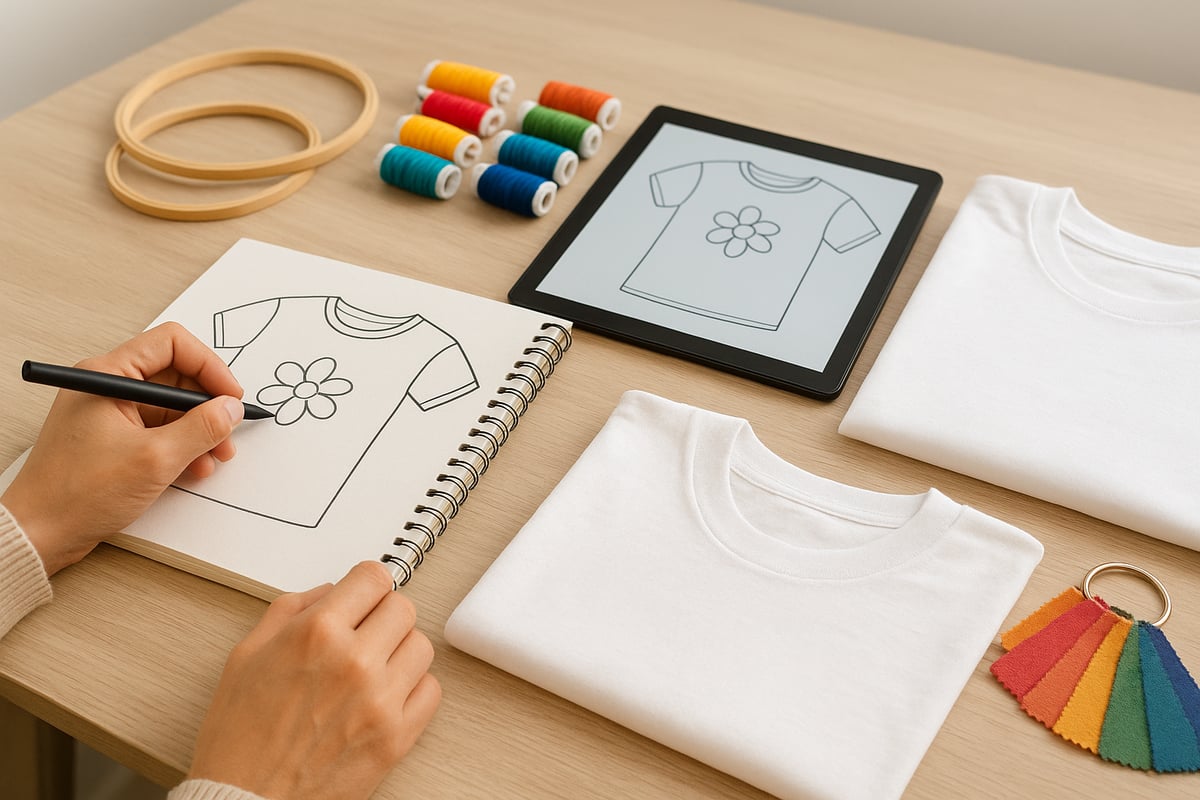
Begin your t shirts and embroidery journey by brainstorming ideas that align with your purpose. Are you designing for a personal statement, business branding, or a team event? Consider your target audience and the message you want to convey.
Research current design trends for 2026, such as bold graphics, minimalistic logos, or eco-conscious motifs. Use digital tools like Procreate or Adobe Illustrator to sketch your ideas and create digital mock-ups. Building a mood board with images, colours, and textures can spark inspiration and refine your concept.
For example, preparing a sports team shirt might involve gathering reference images, team colours, and possible mascots. This groundwork helps you visualise how your t shirts and embroidery design will stand out.
Once you have a concept, prepare your artwork to ensure the best results. Use high-resolution files (at least 300 DPI) for crisp prints, and opt for vector graphics (such as .AI, .SVG, or .EPS) for scalability and clean lines. For embroidery, simplify complex images to avoid excessive detail that could blur during stitching.
Colour management is vital for both t shirts and embroidery. For print, work in CMYK mode to match print output. For embroidery, select thread colours using a manufacturer’s chart. Converting a multi-colour logo to a single-thread embroidery design may require adjusting shades and removing gradients.
Here is a quick comparison of file types:
| File Type | Best For | Scalability | Print Ready | Embroidery Ready |
|---|---|---|---|---|
| .PNG | Medium | Yes | No | |
| .SVG | Both | High | Yes | Yes |
| .AI/.EPS | Both | High | Yes | Yes |
Simplifying artwork and choosing the right file type ensures your t shirts and embroidery look professional and vibrant.
Strategic placement and sizing make a significant difference in the final look of your t shirts and embroidery. Standard placements include the left chest, centre front, sleeves, and upper back. Consider the message and visibility when choosing where to position your design.
For readability and aesthetics, follow sizing guidelines. For example, chest logos typically range from 7 to 10 cm wide, while large back prints can be up to 30 cm. Oversized designs suit relaxed fits, while subtle sleeve embroidery works well for minimal styles.
Compare options:
Balancing design size with the chosen T-shirt fit ensures your t shirts and embroidery stand out for the right reasons.
Selecting the right customisation technique is crucial for achieving your desired results. Direct-to-garment (DTG) printing offers vibrant, full-colour images, while screen printing excels for bold, simple designs and large runs. Heat transfer is suitable for smaller batches and special finishes.
Embroidery adds texture and durability, making it ideal for logos and text. Combining print and embroidery can create unique effects, such as printed graphics with embroidered highlights. When considering cost and turnaround, embroidery is often more durable but may be more expensive for complex graphics.
For a detailed comparison of methods, see this DTG vs. Embroidery Comparison, which explores the strengths and limitations of each approach for t shirts and embroidery.
Example: Festival T-shirts often feature printed artwork for bold visuals and embroidered logos for lasting impact.
You can bring your t shirts and embroidery designs to life by working with a local print shop or using online customisation services. Compare pricing, turnaround time, and product reviews before confirming your order. If you prefer a DIY approach, invest in essential equipment such as a digital embroidery machine, quality threads, and a heat press for printing.
Checklist for ordering custom team T-shirts:
Whether you order in bulk or create at home, attention to detail ensures your t shirts and embroidery meet your expectations.
Embroidery on T shirts and embroidery projects has evolved far beyond simple monograms or logos. Mastering advanced techniques opens up a world of creative possibilities, allowing you to produce unique, professional-grade results that stand out in 2026.
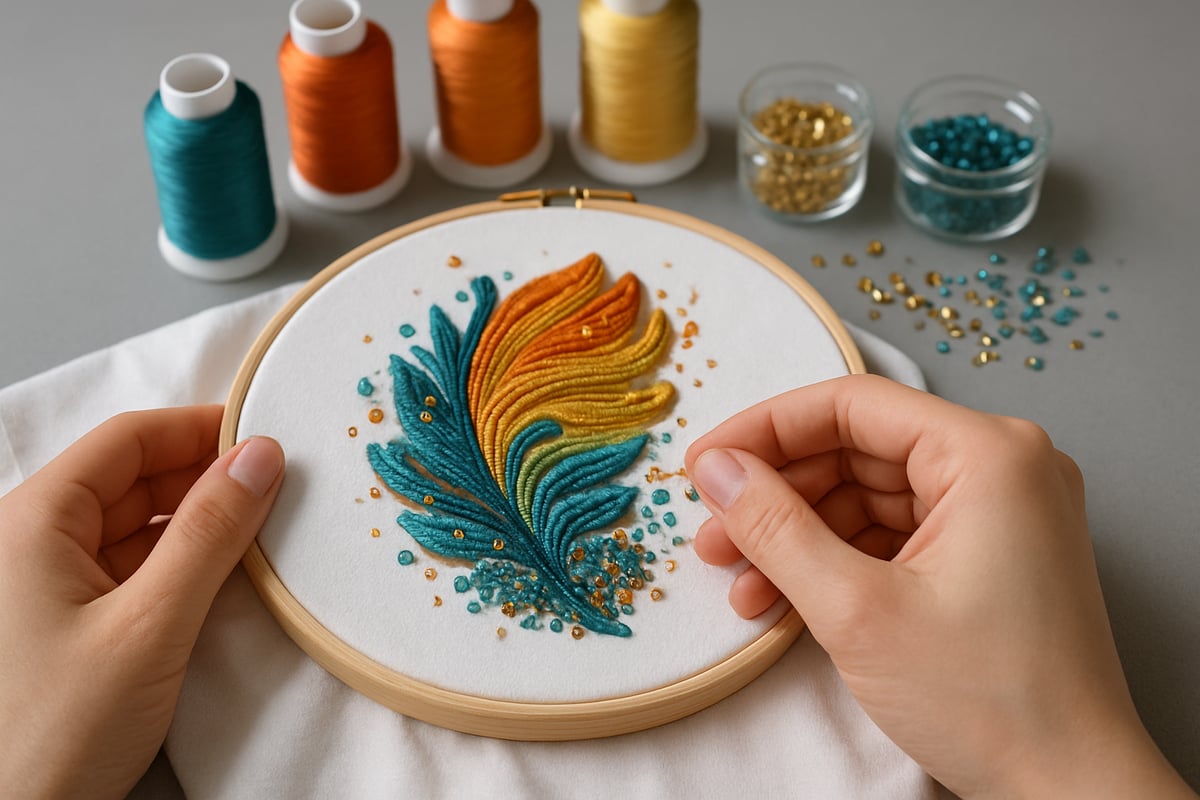
One of the most impressive ways to elevate t shirts and embroidery is by layering stitches to create a three-dimensional effect. Start with a solid base using fill or satin stitches, then build up with additional layers of thread. This technique adds depth and texture, making designs pop visually and to the touch.
Experiment with thread weights and needle sizes to achieve different levels of relief. Heavier threads and larger needles create bolder raised elements, while fine threads offer subtle texture. Layering is especially effective for floral motifs, lettering, or graphic shapes, turning a basic tee into a tactile statement piece.
Advanced t shirts and embroidery often incorporate mixed media for truly unique finishes. Adding beads, sequins, patches, or appliqué brings extra dimension and sparkle to your work. For example, outline a motif with embroidery, then highlight areas with sequins for shimmer, or stitch on fabric patches for contrast.
When combining materials, always secure embellishments firmly, especially on garments that will be washed frequently. Use a stabiliser to keep the T-shirt fabric from stretching under the weight. Mixed media is ideal for festival wear, special occasion tees, or fashion-forward branding, making each creation one of a kind.
Colour blending is a top trend in t shirts and embroidery for 2026. Gradient threads, sometimes called ombré, shift seamlessly between shades within a single strand. This creates dynamic, modern effects that look especially striking on bold or minimalist designs.
To use gradient threads effectively, plan the direction of your stitches to follow the colour change. For more control, blend two or three thread colours manually by alternating them in your needle. This approach works beautifully for abstract patterns, stylised text, or nature-inspired motifs, bringing fresh energy to any T-shirt.
For t shirts and embroidery to look truly professional, focus on precision and clean finishes. Use a sharp needle and the correct thread tension to avoid puckering or loose stitches. Always stabilise your T-shirt with the right backing—tear-away for lighter designs, cut-away for dense embroidery.
Troubleshooting is key: if threads break, check for burrs on your needle or tension issues. Misaligned stitches may mean the hoop is too loose. Keep your workspace clean and threads organised to minimise snags. With careful technique, even complex designs will look crisp and last through repeated wear.
The world of t shirts and embroidery is rapidly growing, with UK designers embracing innovative trends. There is a strong shift towards sustainable threads, upcycled garments, and tech-infused embroidery. Case studies show how layering and mixed media can turn a plain tee into a work of art, inspiring both personal and commercial projects.
Market data reflects this enthusiasm, with the embroidered apparel sector projected to expand by 8% CAGR through 2026. For deeper insights on industry growth and emerging styles, explore the Decorated Apparel Market Size & Growth Analysis, 2033. Whether you are creating for yourself or for business, the future of embroidery on T-shirts is bright and brimming with creative potential.
Caring for your custom t shirts and embroidery is essential if you want your creations to last, look vibrant, and remain comfortable. With the right techniques, you can keep both printed and embroidered designs in top condition for years. Follow these practical tips to ensure your garments stay as unique and fresh as the day you made them.
To maintain the quality of t shirts and embroidery, always wash garments inside out. Use cold or lukewarm water and a mild, colour-safe detergent. Select a gentle cycle to minimise agitation and prevent thread damage.
Avoid bleach and harsh chemicals, which can degrade both print and embroidery threads. For drying, air drying is ideal. Lay garments flat or hang them in a shaded area to prevent shrinking and fading. Tumble drying may cause embroidery to pucker or prints to crack. If you must use a dryer, choose a low-heat, delicate setting, but remember that air drying extends the life of your t shirts and embroidery.
When ironing t shirts and embroidery, always set your iron to a low temperature and avoid direct contact with embroidered areas. Place a clean, thin cloth between the iron and the design to protect stitches and colours.
Store your garments in a cool, dry place, folded neatly to prevent creases and distortion. Hanging is suitable for most items, but avoid wire hangers, as they can stretch the fabric. Proper storage ensures that t shirts and embroidery retain their shape and visual appeal over time.
Minor snags or loose threads on t shirts and embroidery can be fixed at home with a needle and matching thread. Gently pull the loose thread to the inside of the garment and secure it with a small knot or a dab of fabric glue. For significant damage, such as large pulls or torn embroidery, consider seeking help from a professional tailor or embroidery specialist.
Regularly inspect your garments for signs of wear. Addressing small issues early prevents further damage and helps your t shirts and embroidery always look their best.
Sustainable care is growing in importance as more people seek to keep their t shirts and embroidery in use for longer. Choose eco-friendly detergents and wash at lower temperatures to reduce your environmental impact. Air drying not only saves energy but also helps maintain the vibrancy of both prints and embroidery.
Recent research shows that 74% of consumers are more likely to buy garments with clear care instructions (Mintel, 2025). In fact, UK consumers plan to buy longer-lasting fashion in 2026, with a strong shift toward sustainable practices and materials. By following these care tips, you support both your wardrobe and the planet.
Step into 2026 where t shirts and embroidery are more creative and innovative than ever. Personalisation is no longer just a trend, but a movement driven by technology, sustainability, and social influence. Whether you are designing for yourself, your business, or a community project, the possibilities are limitless.
Events in 2026 are centred around individuality and group identity. From music festivals to charity runs, t shirts and embroidery allow participants to create lasting memories. Imagine a sports team shirt embroidered with each player’s initials, or a charity run tee featuring a bespoke design that tells the story of the cause. Corporate branding is also evolving, with companies opting for custom embroidery to foster team spirit and brand presence at trade shows.
Personalisation is reaching new heights with t shirts and embroidery in 2026. Monograms remain a classic choice, but now, custom artwork and interactive elements are taking centre stage. Embroidered QR codes are increasingly popular, linking wearers to digital experiences or exclusive content. For more on how to make your designs truly unique, explore the Personalised T-Shirt Customisation Guide.
Top personalisation features include:
Brands are partnering with artists, musicians, and influencers to produce limited-edition t shirts and embroidery collections. These collaborations offer exclusivity and spark excitement among consumers. Limited runs with numbered tags or signature embroidery add to the collectability. Such projects often sell out quickly, driven by social media buzz and the appeal of owning a wearable piece of art.
Sustainability is at the forefront of t shirts and embroidery trends. Designers are using recycled threads, organic fabrics, and upcycled garments to minimise environmental impact. According to the Sustainable Fashion Industry Statistics: Market Data Report 2026, the demand for eco-friendly apparel continues to rise as consumers seek transparency and ethical sourcing.
Table: Sustainable vs. Traditional Embroidery Materials
| Feature | Sustainable Materials | Traditional Materials |
|---|---|---|
| Thread Source | Recycled polyester, bamboo | Virgin polyester, cotton |
| Fabric Choice | Organic cotton, upcycled | Conventional cotton |
| Environmental Impact | Low | Higher |
Sustainable embroidery not only benefits the planet, but also adds value for eco-conscious customers.
Technology is transforming t shirts and embroidery into interactive experiences. NFC tags stitched into garments offer instant access to event info or digital content. LED threads allow for dynamic, glowing graphics that change with movement or sound. These innovations are especially popular for festivals and promotional events, giving wearers a futuristic edge. As tech advances, expect even more creative applications for t shirts and embroidery.
Platforms like TikTok and Instagram are shaping t shirts and embroidery trends in 2026. Viral videos showcase DIY techniques, creative collaborations, and the latest tech-enabled designs. Hashtags such as #EmbroideredTee and #CustomTShirt spark global conversations and inspire new ideas. Social media is the go-to source for real-time inspiration, with influencers sharing behind-the-scenes looks at their creative process.
A standout example is a UK charity campaign that used t shirts and embroidery to raise both awareness and funds. Limited-edition tees featured hand-embroidered motifs designed by local artists, with a portion of proceeds supporting community projects. This approach not only generated buzz, but also fostered a sense of unity and pride among participants.
Looking ahead, there has never been a better time to experiment with t shirts and embroidery. Embrace the trends, explore new techniques, and let your creativity lead the way in 2026.
OK T-Shirt
126 Beeches Rd
Birmingham
B42 2HQ
